From a reusable service promise
to operation and improvement
A practical introduction · 25 minutes
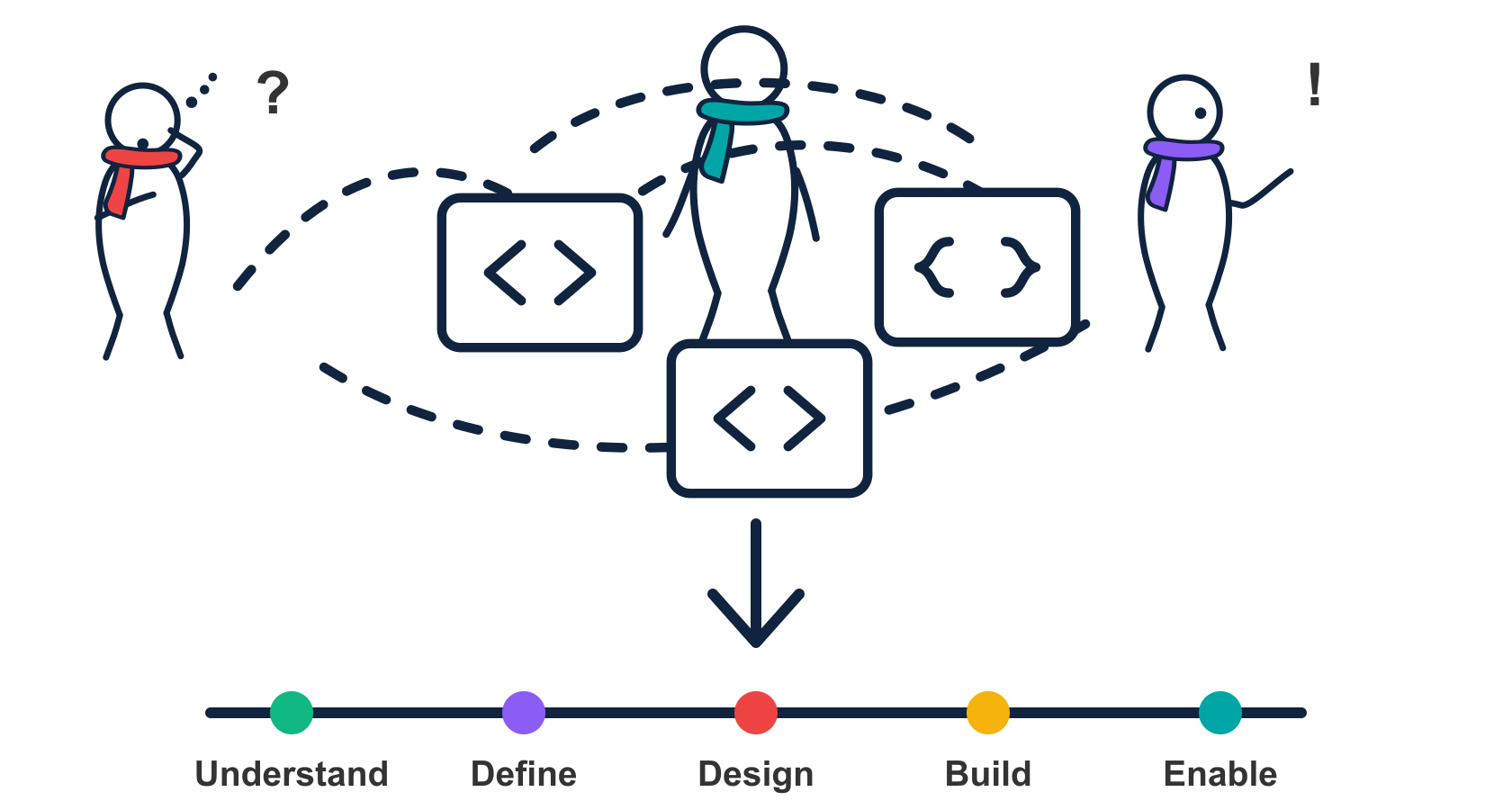
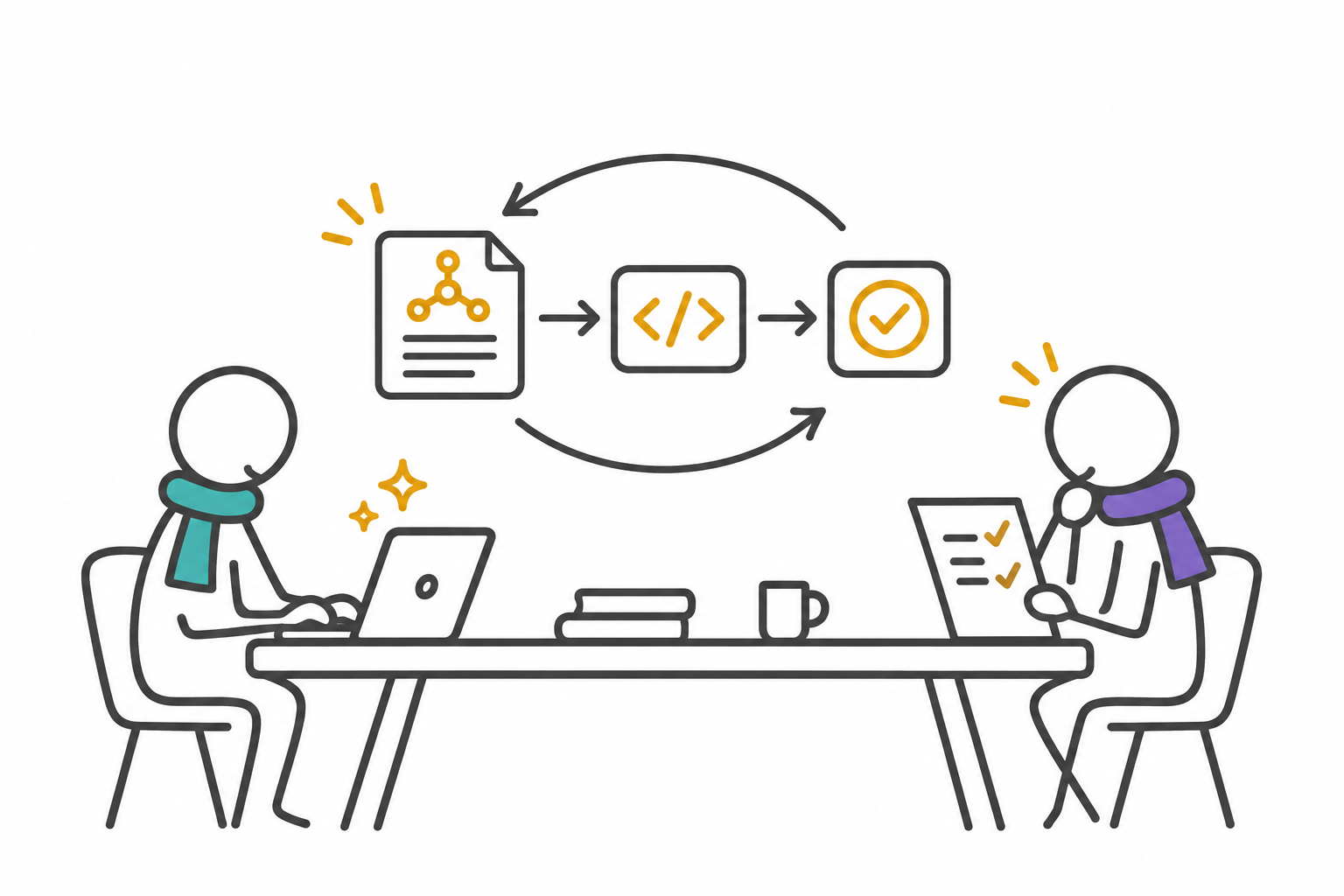
Visual: APIOps scarf-human scene connecting fragmented work to reusable capabilities
Slide 2: Start with the outcome people need
Read text version of slide 2
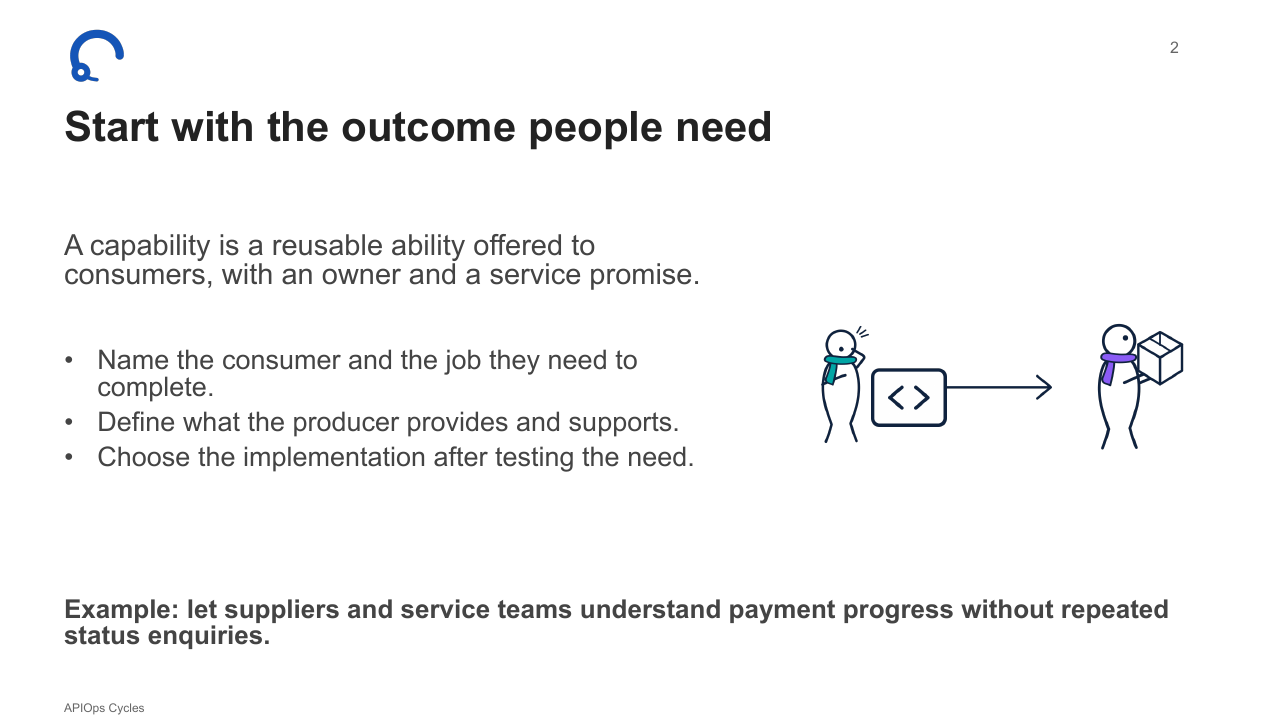
A capability is a reusable ability offered to consumers, with an owner and a service promise.
Name the consumer and the job they need to complete.
Define what the producer provides and supports.
Choose the implementation after testing the need.
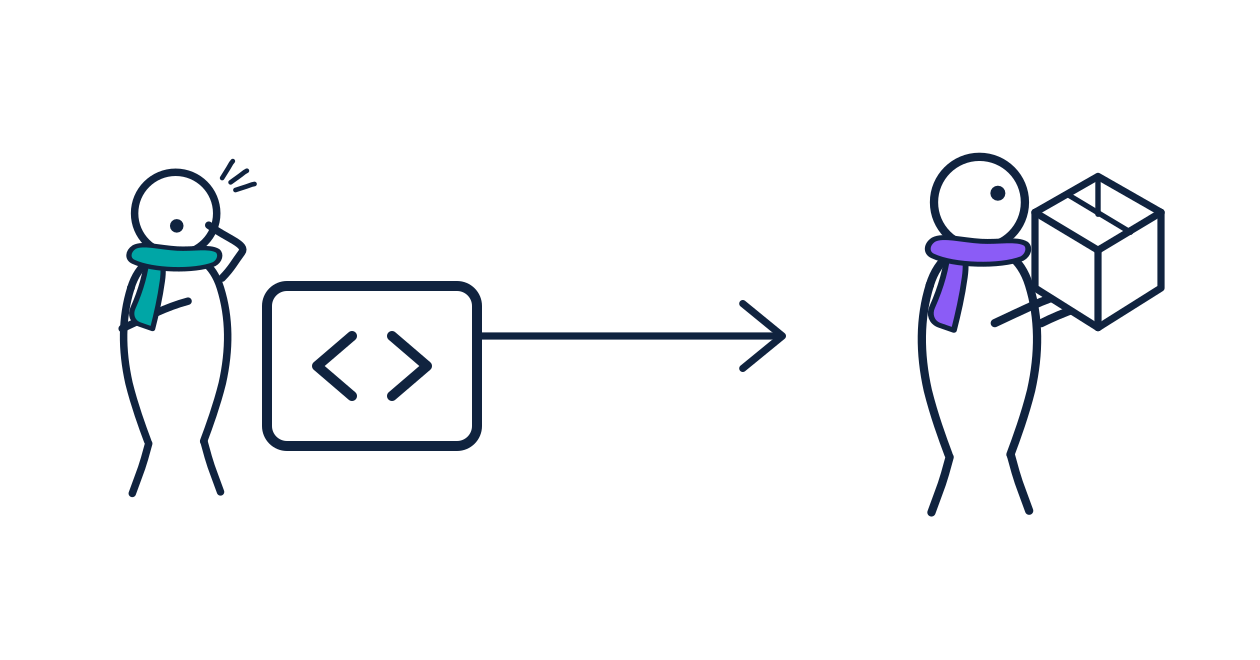
Visual: APIOps human scene illustrating that an API alone does not define a useful capability
Example: let suppliers and service teams understand payment progress without repeated status enquiries.
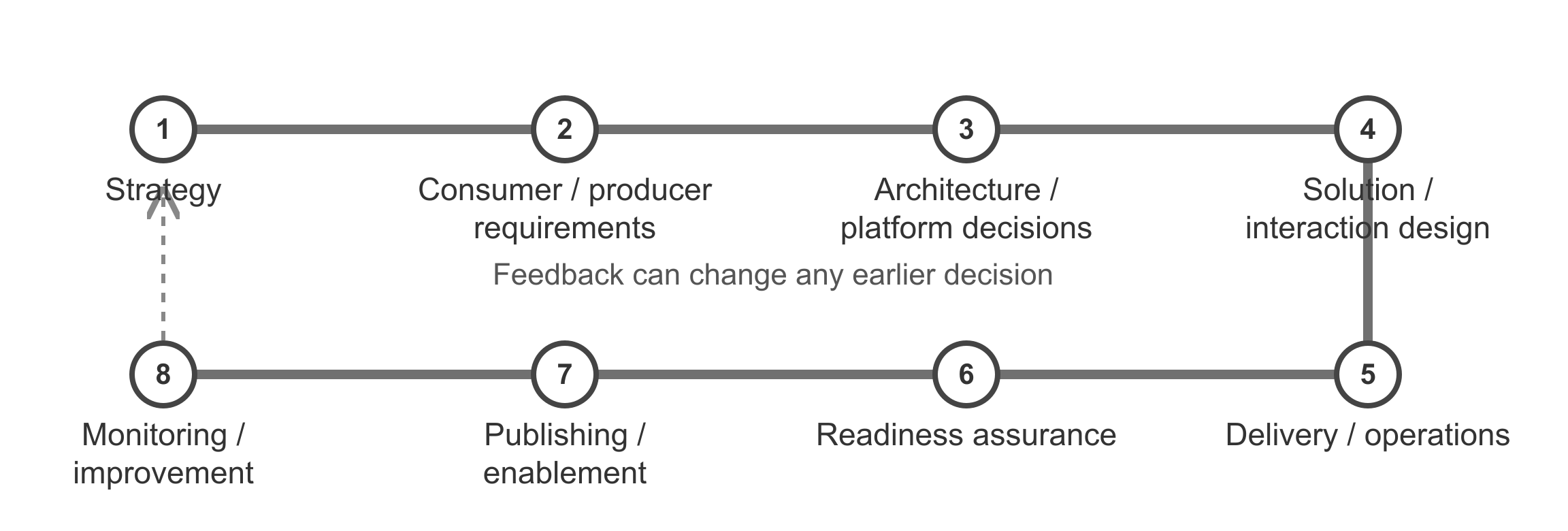
Slide 3: Eight stations, revisited as evidence changes
Read text version of slide 3
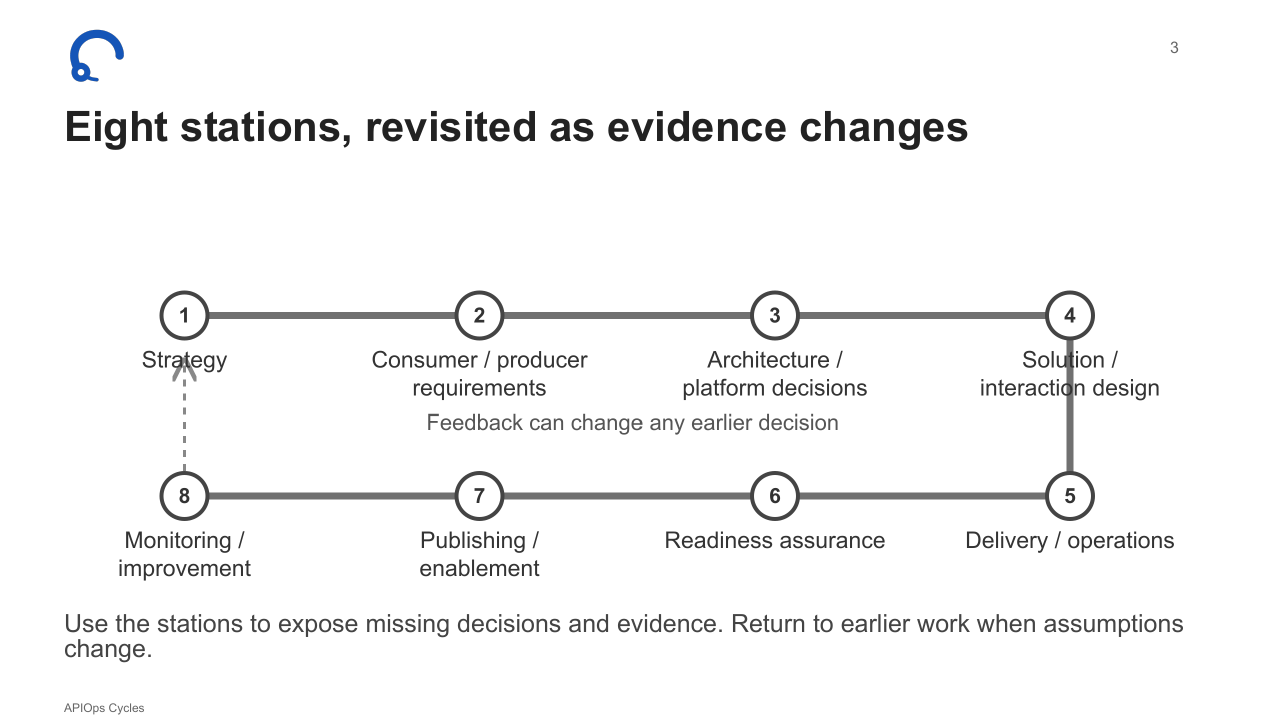
Visual: Capability Productization Cycle route: strategy; consumer and producer requirements; architecture; solution and interaction design; delivery and operations; readiness; publishing and enablement; monitoring and improvement; feedback returns to earlier decisions
Use the stations to expose missing decisions and evidence. Return to earlier work when assumptions change.
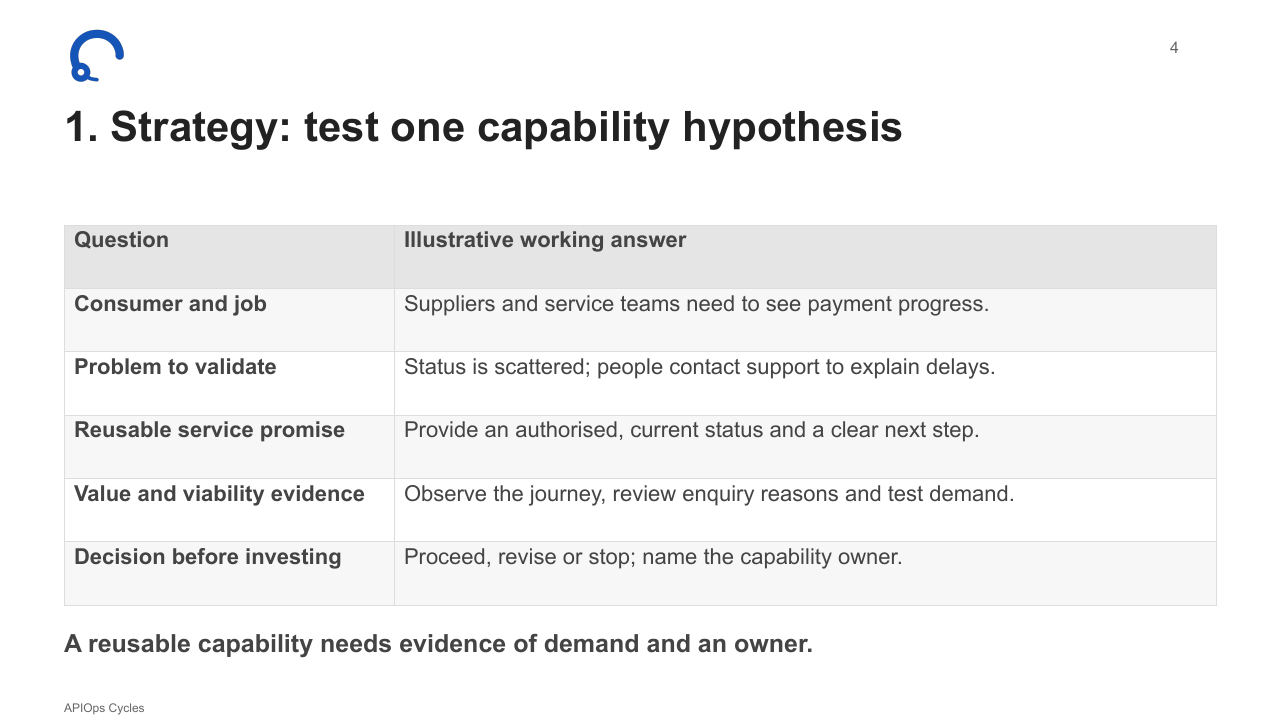
Slide 4: 1. Strategy: test one capability hypothesis
Read text version of slide 4
Question
Illustrative working answer
Consumer and job
Suppliers and service teams need to see payment progress.
Problem to validate
Status is scattered; people contact support to explain delays.
Reusable service promise
Provide an authorised, current status and a clear next step.
Value and viability evidence
Observe the journey, review enquiry reasons and test demand.
Decision before investing
Proceed, revise or stop; name the capability owner.
A reusable capability needs evidence of demand and an owner.
Slide 5: 2. Requirements: agree the service together
Read text version of slide 5
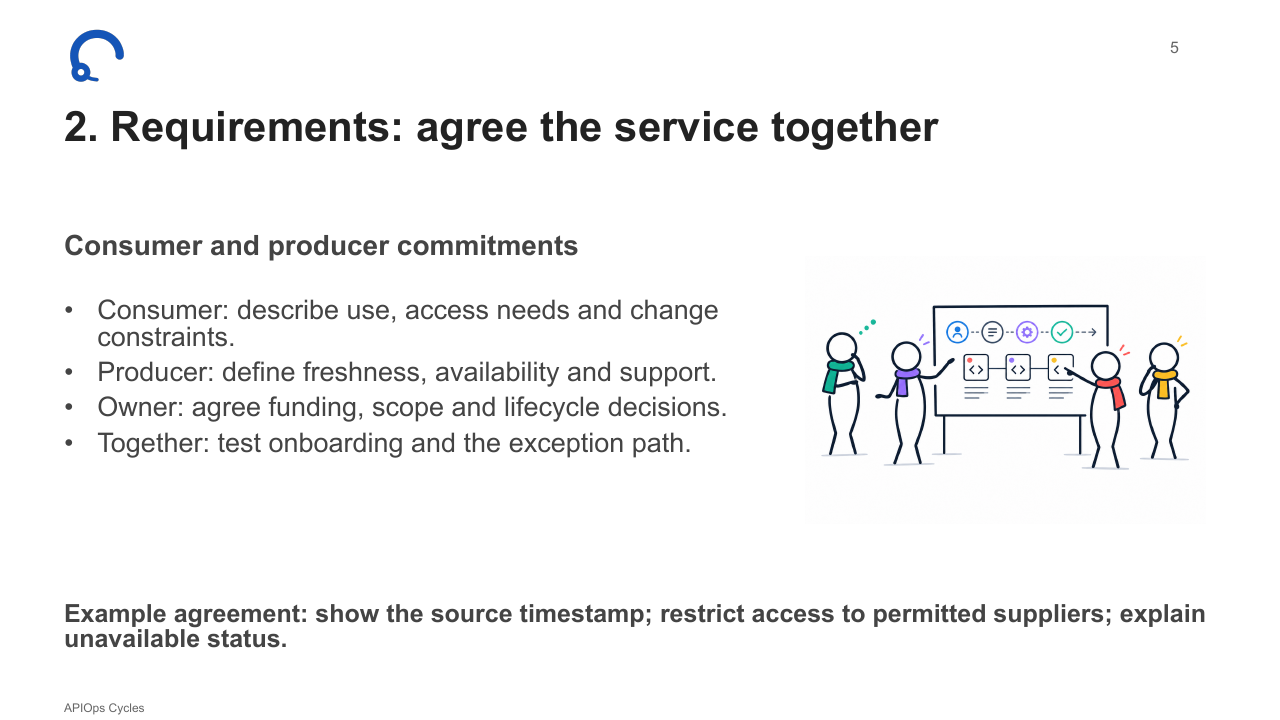
Consumer and producer commitments
Consumer: describe use, access needs and change constraints.
Producer: define freshness, availability and support.
Owner: agree funding, scope and lifecycle decisions.
Together: test onboarding and the exception path.
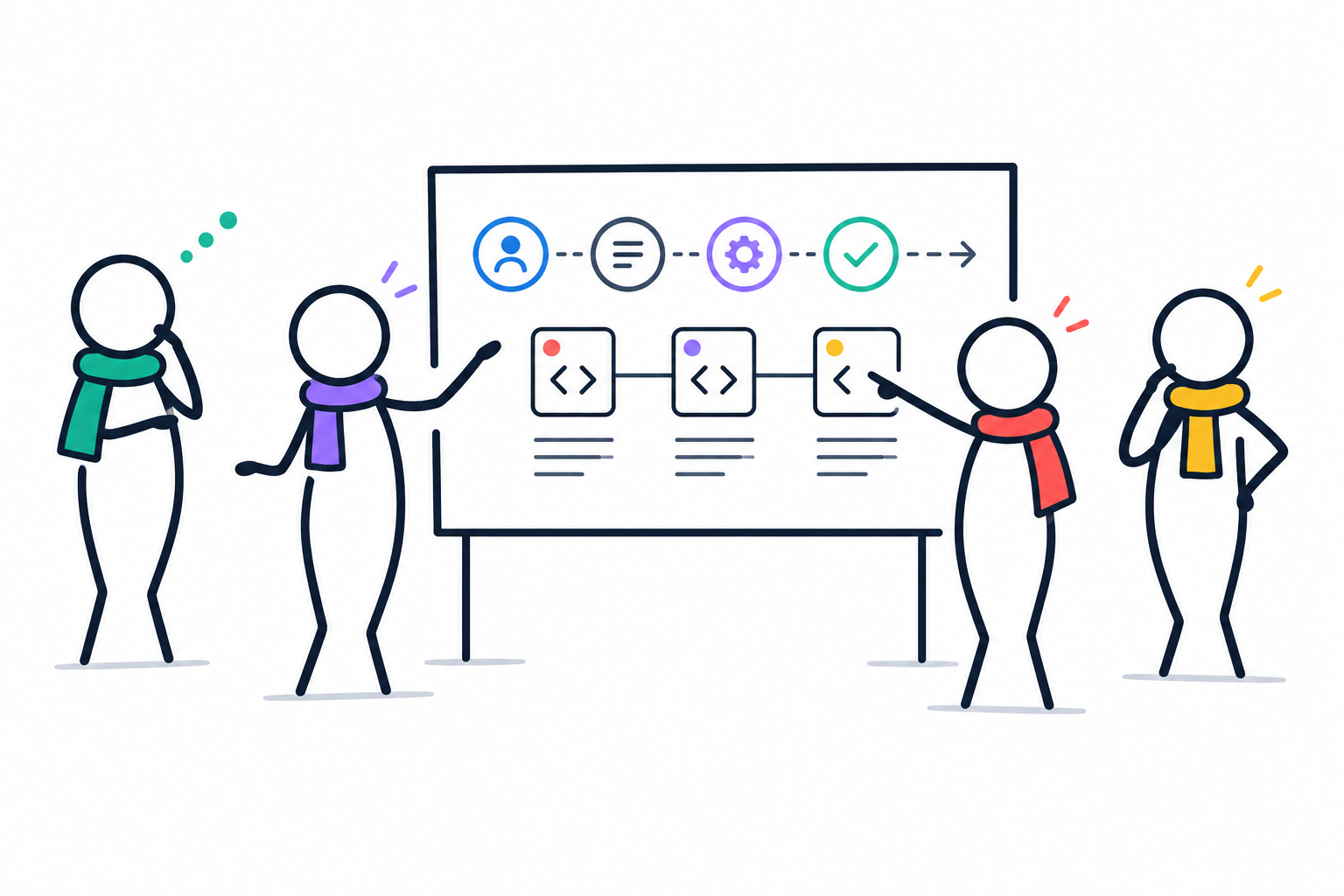
Visual: APIOps human workshop scene representing agreement between capability consumers, producers and owners
Example agreement: show the source timestamp; restrict access to permitted suppliers; explain unavailable status.
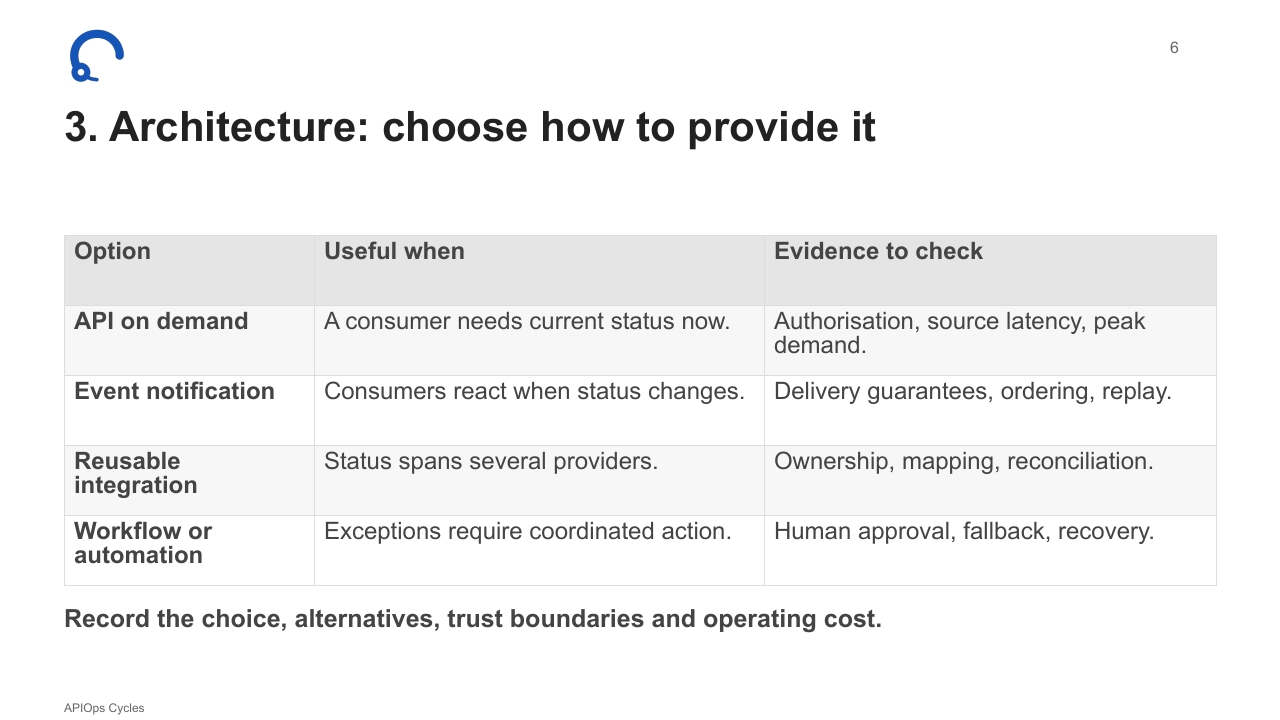
Slide 6: 3. Architecture: choose how to provide it
Read text version of slide 6
Option
Useful when
Evidence to check
API on demand
A consumer needs current status now.
Authorisation, source latency, peak demand.
Event notification
Consumers react when status changes.
Delivery guarantees, ordering, replay.
Reusable integration
Status spans several providers.
Ownership, mapping, reconciliation.
Workflow or automation
Exceptions require coordinated action.
Human approval, fallback, recovery.
Record the choice, alternatives, trust boundaries and operating cost.
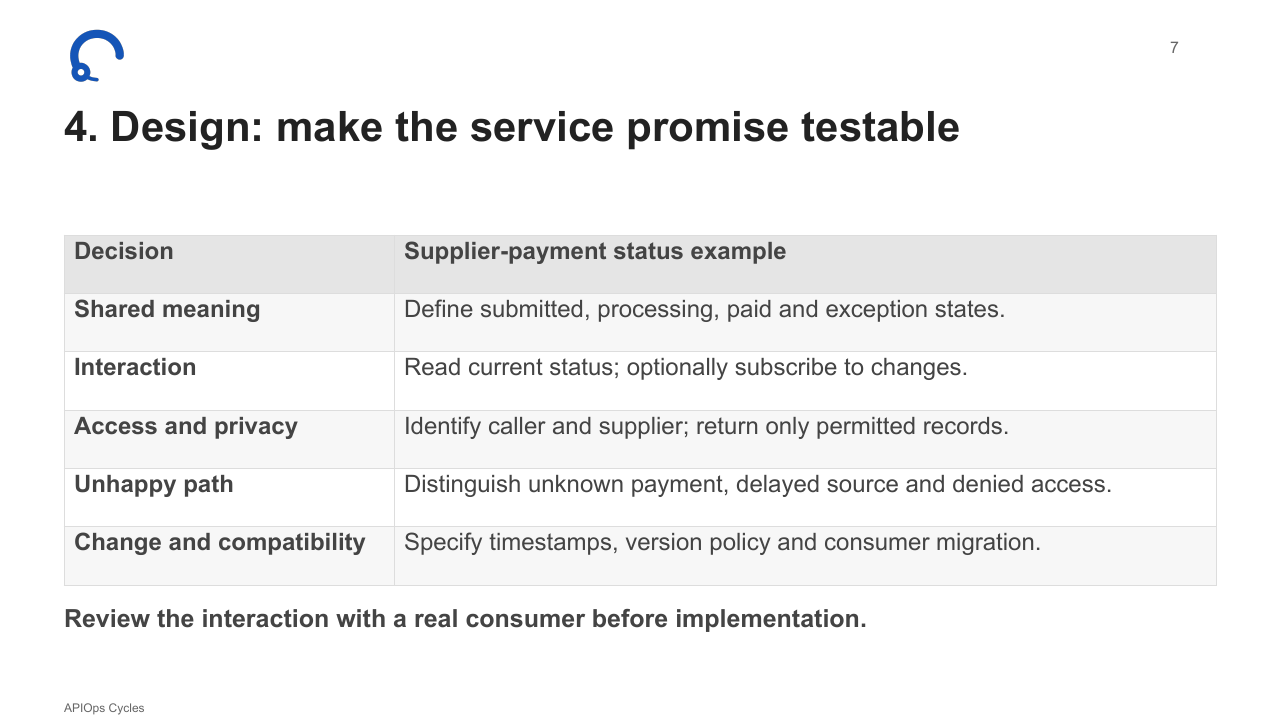
Slide 7: 4. Design: make the service promise testable
Read text version of slide 7
Decision
Supplier-payment status example
Shared meaning
Define submitted, processing, paid and exception states.
Interaction
Read current status; optionally subscribe to changes.
Access and privacy
Identify caller and supplier; return only permitted records.
Unhappy path
Distinguish unknown payment, delayed source and denied access.
Change and compatibility
Specify timestamps, version policy and consumer migration.
Review the interaction with a real consumer before implementation.
Slide 8: 5. Delivery includes operation and support
Read text version of slide 8
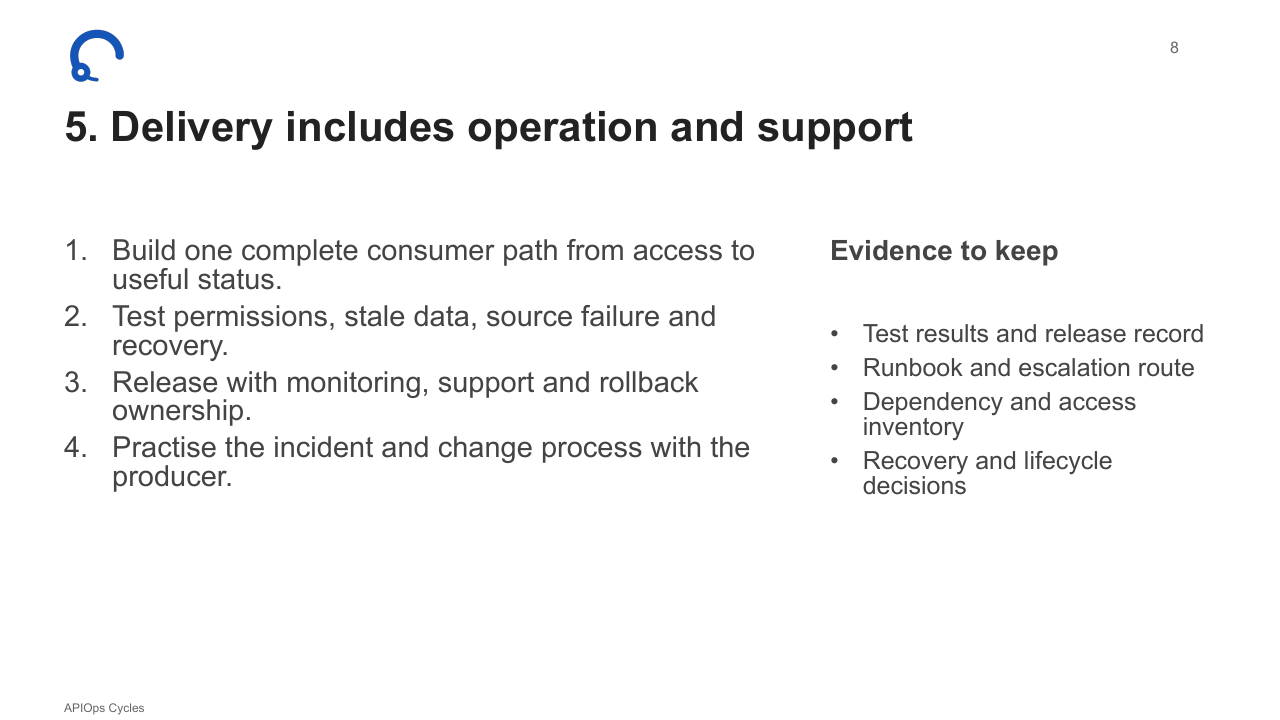
Build one complete consumer path from access to useful status.
Test permissions, stale data, source failure and recovery.
Release with monitoring, support and rollback ownership.
Practise the incident and change process with the producer.
Evidence to keep
Test results and release record
Runbook and escalation route
Dependency and access inventory
Recovery and lifecycle decisions
Slide 9: Use AI with agreed capability context
Read text version of slide 9
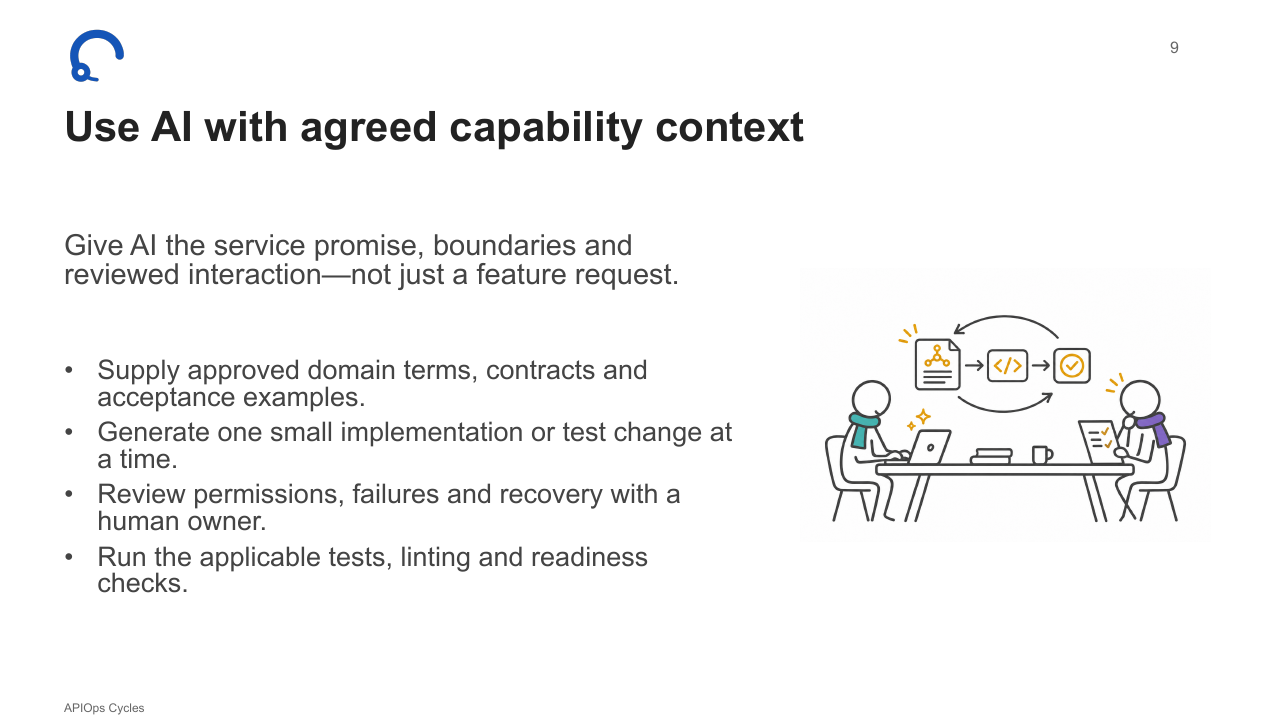
Give AI the service promise, boundaries and reviewed interaction—not just a feature request.
Supply approved domain terms, contracts and acceptance examples.
Generate one small implementation or test change at a time.
Review permissions, failures and recovery with a human owner.
Run the applicable tests, linting and readiness checks.
Visual: Conceptual APIOps illustration of AI-assisted building with human review
Slide 10: 6. Readiness: decide from evidence
Read text version of slide 10
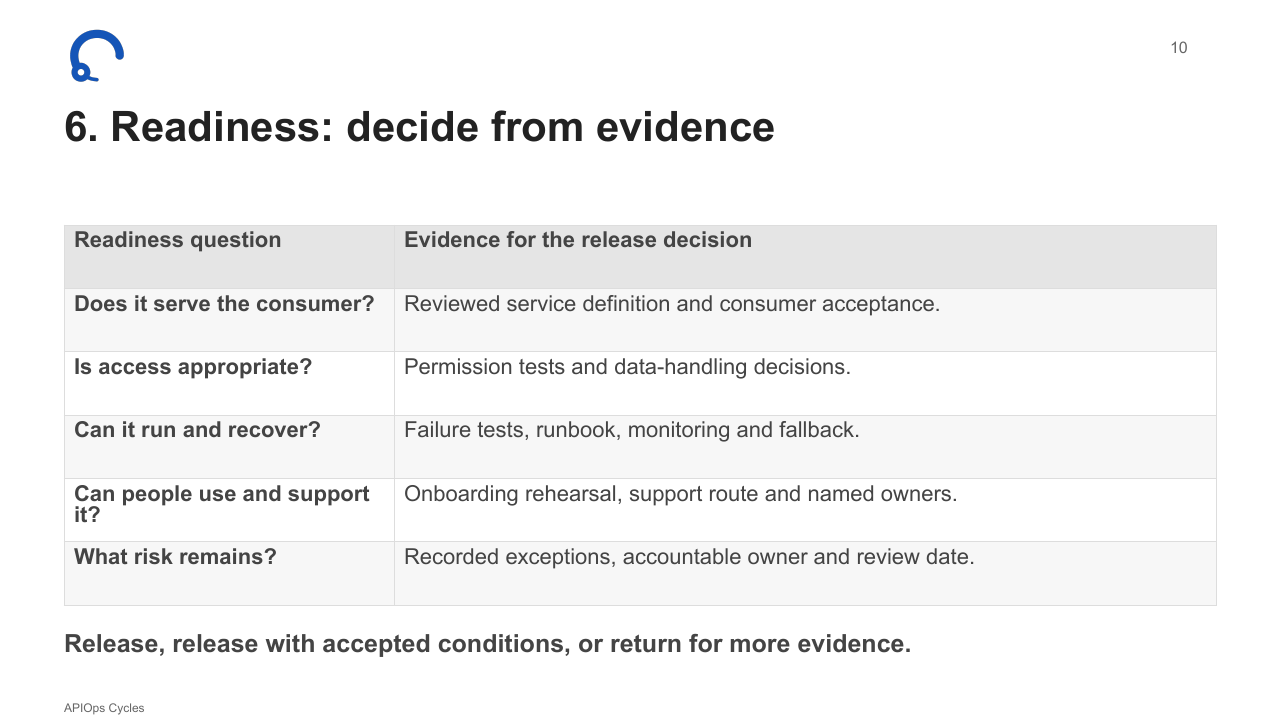
Readiness question
Evidence for the release decision
Does it serve the consumer?
Reviewed service definition and consumer acceptance.
Is access appropriate?
Permission tests and data-handling decisions.
Can it run and recover?
Failure tests, runbook, monitoring and fallback.
Can people use and support it?
Onboarding rehearsal, support route and named owners.
What risk remains?
Recorded exceptions, accountable owner and review date.
Release, release with accepted conditions, or return for more evidence.
Slide 11: 7. Publish a capability people can adopt
Read text version of slide 11
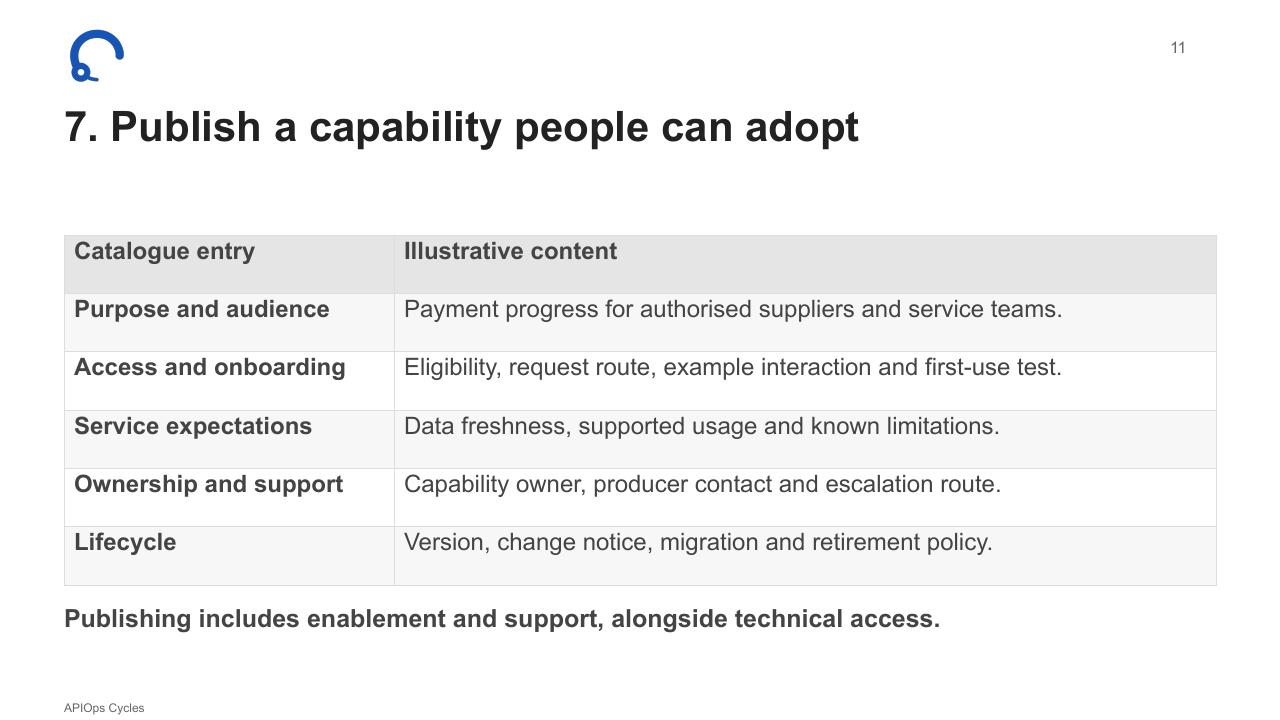
Catalogue entry
Illustrative content
Purpose and audience
Payment progress for authorised suppliers and service teams.
Access and onboarding
Eligibility, request route, example interaction and first-use test.
Service expectations
Data freshness, supported usage and known limitations.
Ownership and support
Capability owner, producer contact and escalation route.
Lifecycle
Version, change notice, migration and retirement policy.
Publishing includes enablement and support, alongside technical access.
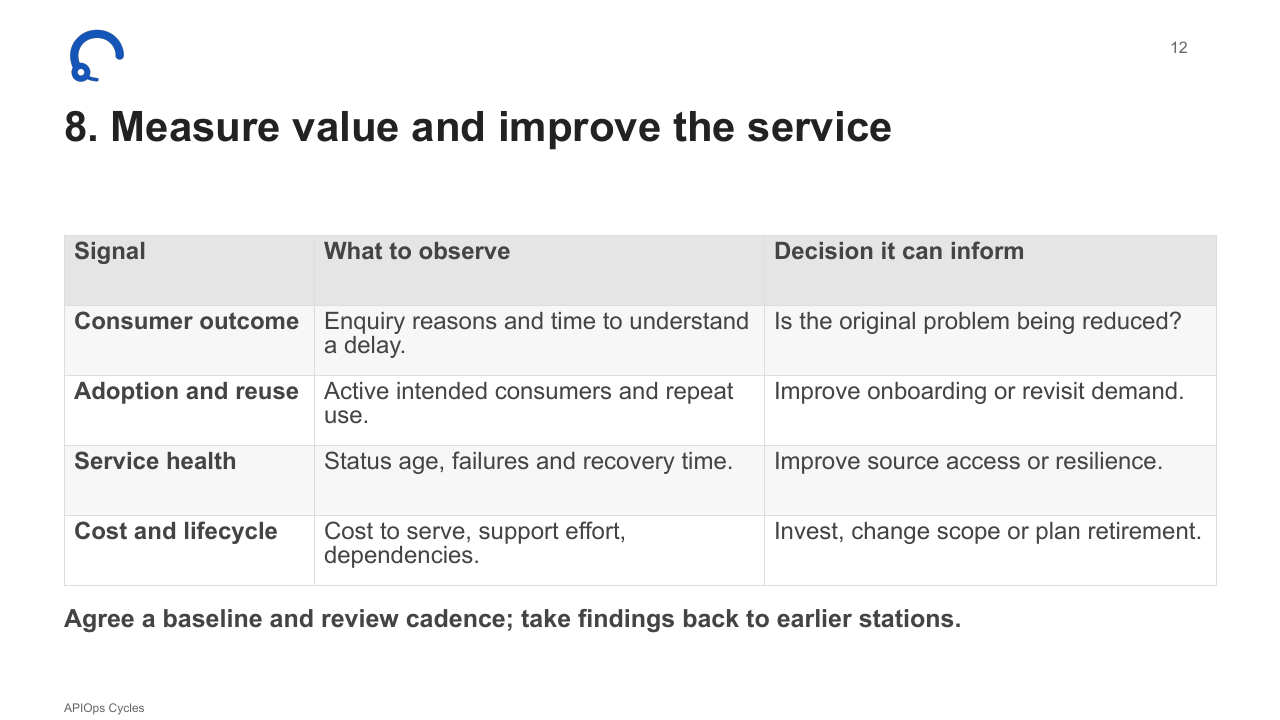
Slide 12: 8. Measure value and improve the service
Read text version of slide 12
Signal
What to observe
Decision it can inform
Consumer outcome
Enquiry reasons and time to understand a delay.
Is the original problem being reduced?
Adoption and reuse
Active intended consumers and repeat use.
Improve onboarding or revisit demand.
Service health
Status age, failures and recovery time.
Improve source access or resilience.
Cost and lifecycle
Cost to serve, support effort, dependencies.
Invest, change scope or plan retirement.
Agree a baseline and review cadence; take findings back to earlier stations.
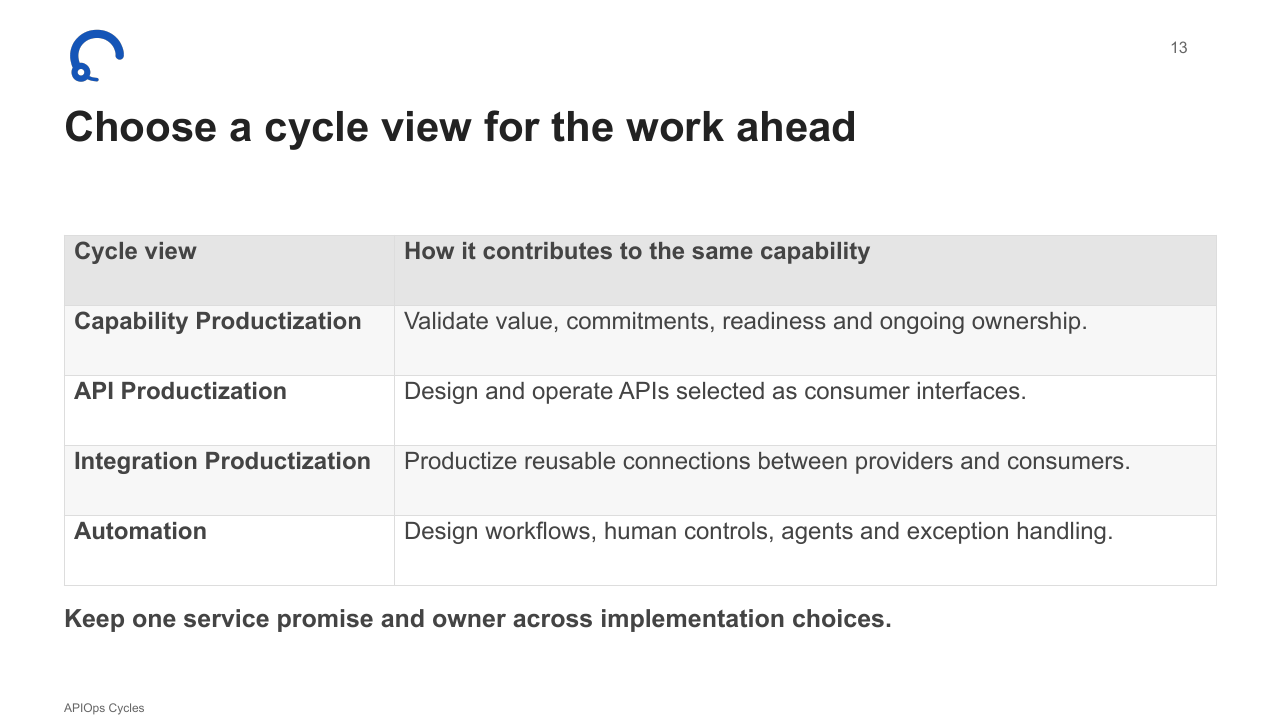
Slide 13: Choose a cycle view for the work ahead
Read text version of slide 13
Cycle view
How it contributes to the same capability
Capability Productization
Validate value, commitments, readiness and ongoing ownership.
API Productization
Design and operate APIs selected as consumer interfaces.
Integration Productization
Productize reusable connections between providers and consumers.
Automation
Design workflows, human controls, agents and exception handling.
Keep one service promise and owner across implementation choices.
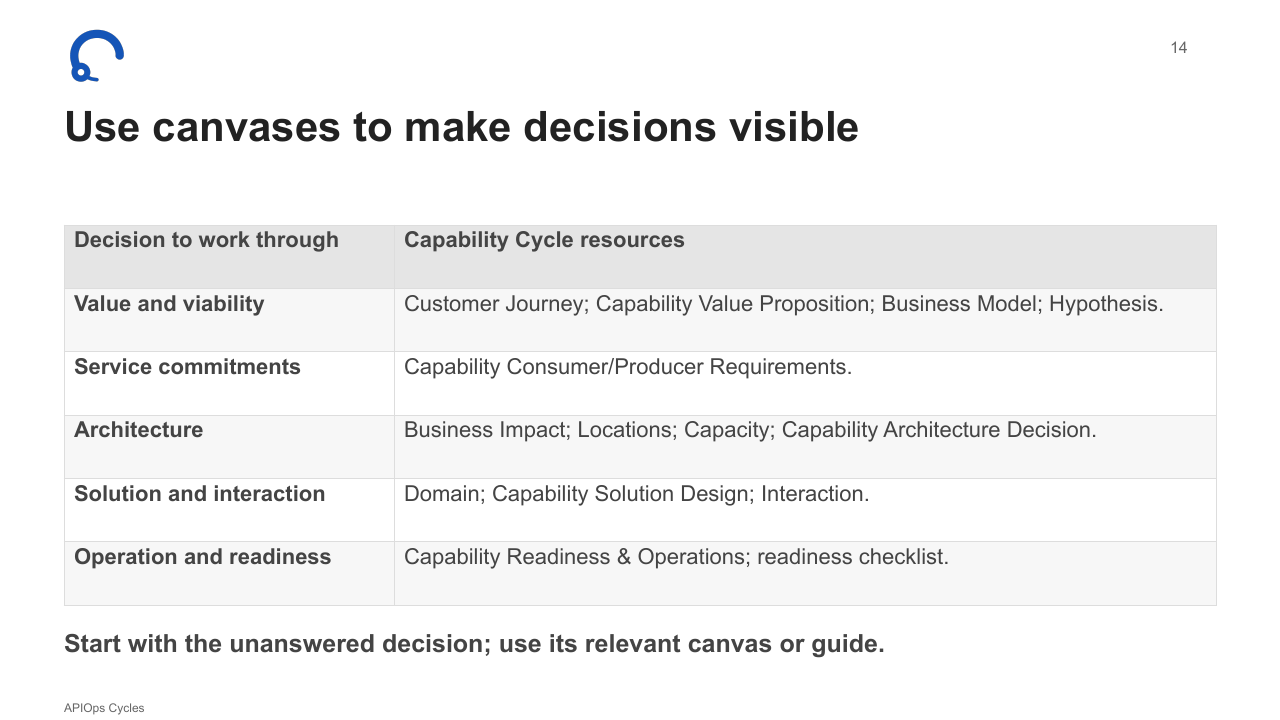
Slide 14: Use canvases to make decisions visible
Read text version of slide 14
Decision to work through
Capability Cycle resources
Value and viability
Customer Journey; Capability Value Proposition; Business Model; Hypothesis.
Service commitments
Capability Consumer/Producer Requirements.
Architecture
Business Impact; Locations; Capacity; Capability Architecture Decision.