From API delivery to digital product thinking

Present with Reveal.js or open the text versions. Download PowerPoint · Download PDF · Download Reveal.js

Slide 1: APIOps Cycles

Slide 1: APIOps Cycles
Read text version of slide 1

APIOps Cycles

API delivery and digital product thinking

An Australian financial-services case study

APIsFirst with partner Osaango

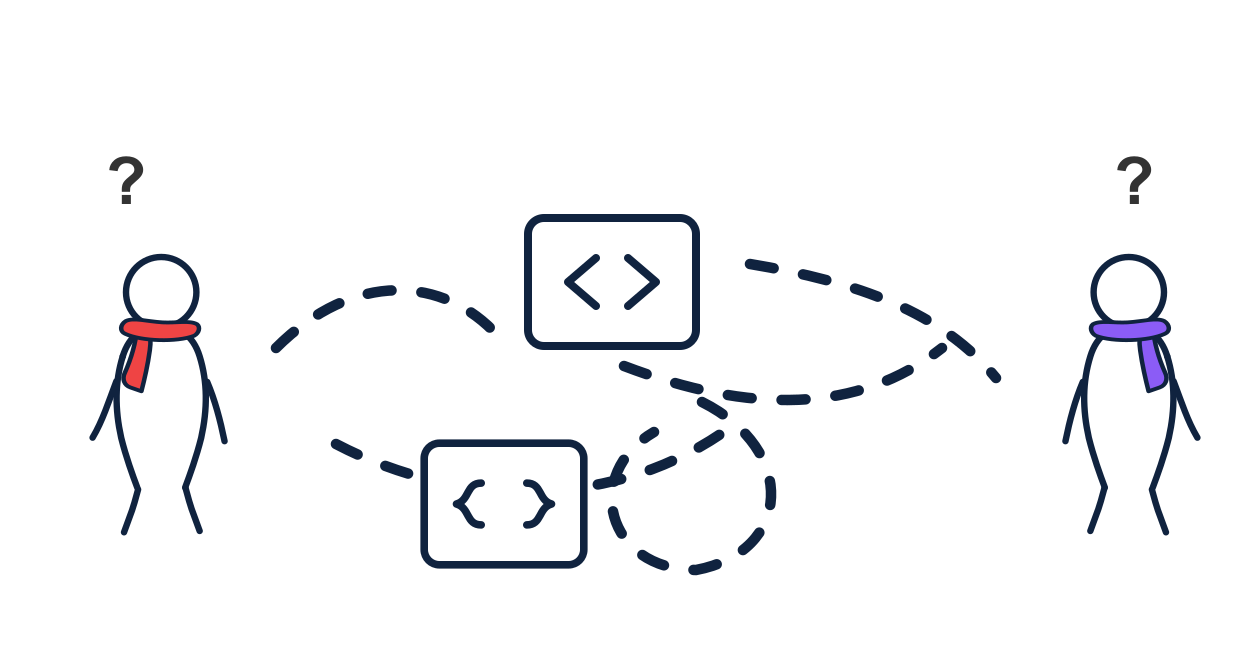
Visual: APIOps human scene showing connected discovery and delivery roles

Slide 2: The challenge: dependencies across teams

Slide 2: The challenge: dependencies across teams
Read text version of slide 2

Established API engineering practices

API products still depended on business and technology teams working across organisational boundaries.

Customer journeys and partner integrations had to fit internal services, legacy systems and compliance obligations.

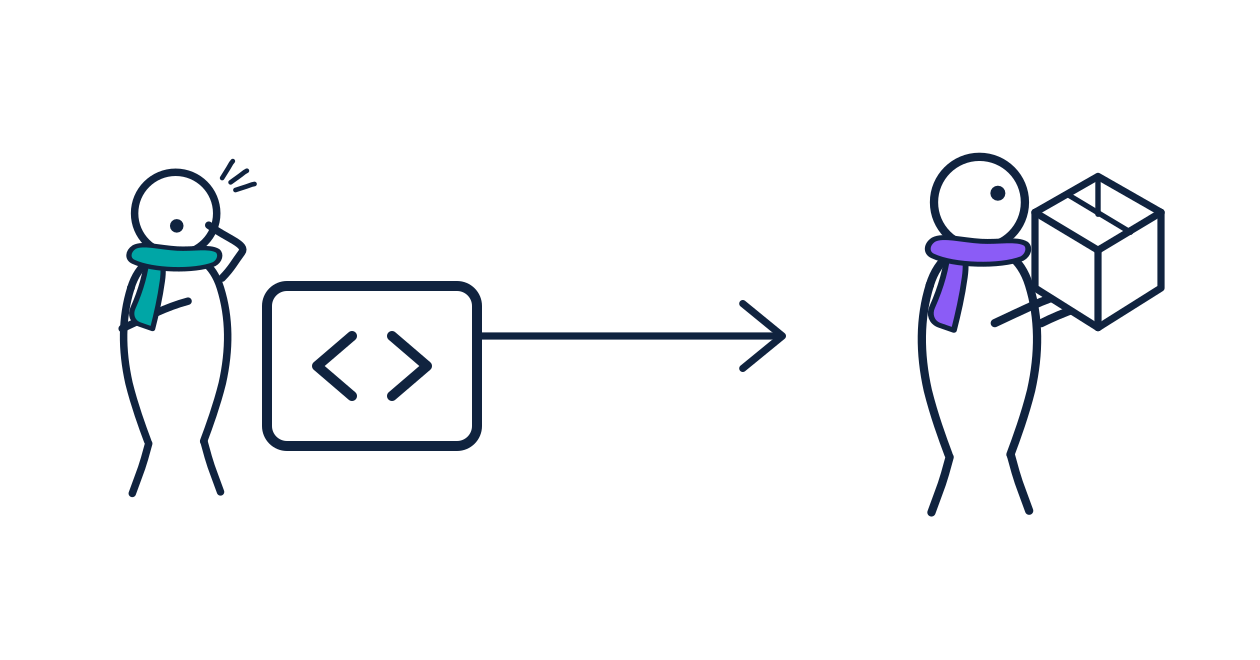
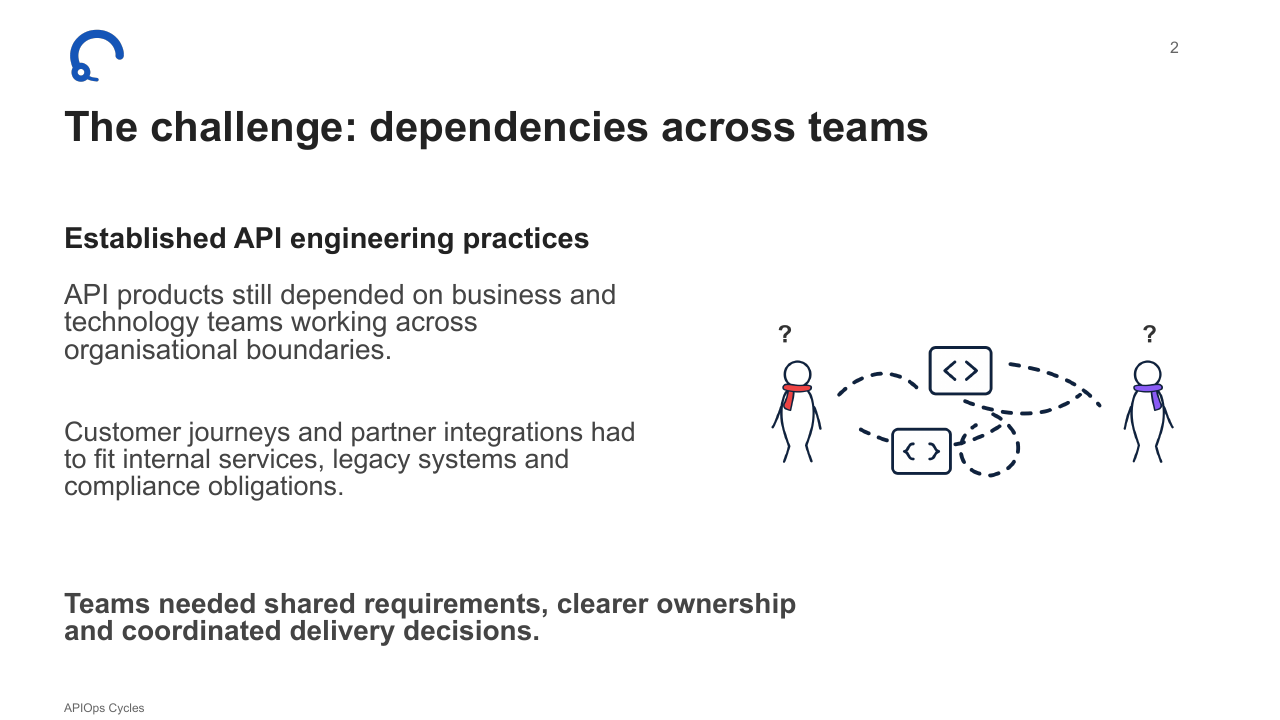
Visual: APIOps human scene showing uncertainty around shared APIs and contracts

Teams needed shared requirements, clearer ownership and coordinated delivery decisions.

Slide 3: Collaborative discovery in the payments case

Slide 3: Collaborative discovery in the payments case
Read text version of slide 3

What the team did

APIsFirst and Osaango facilitated iterative workshops with business stakeholders, architects and engineers.

What the canvases made visible

Customer and API consumer journeys, value propositions, business rules and operating constraints.

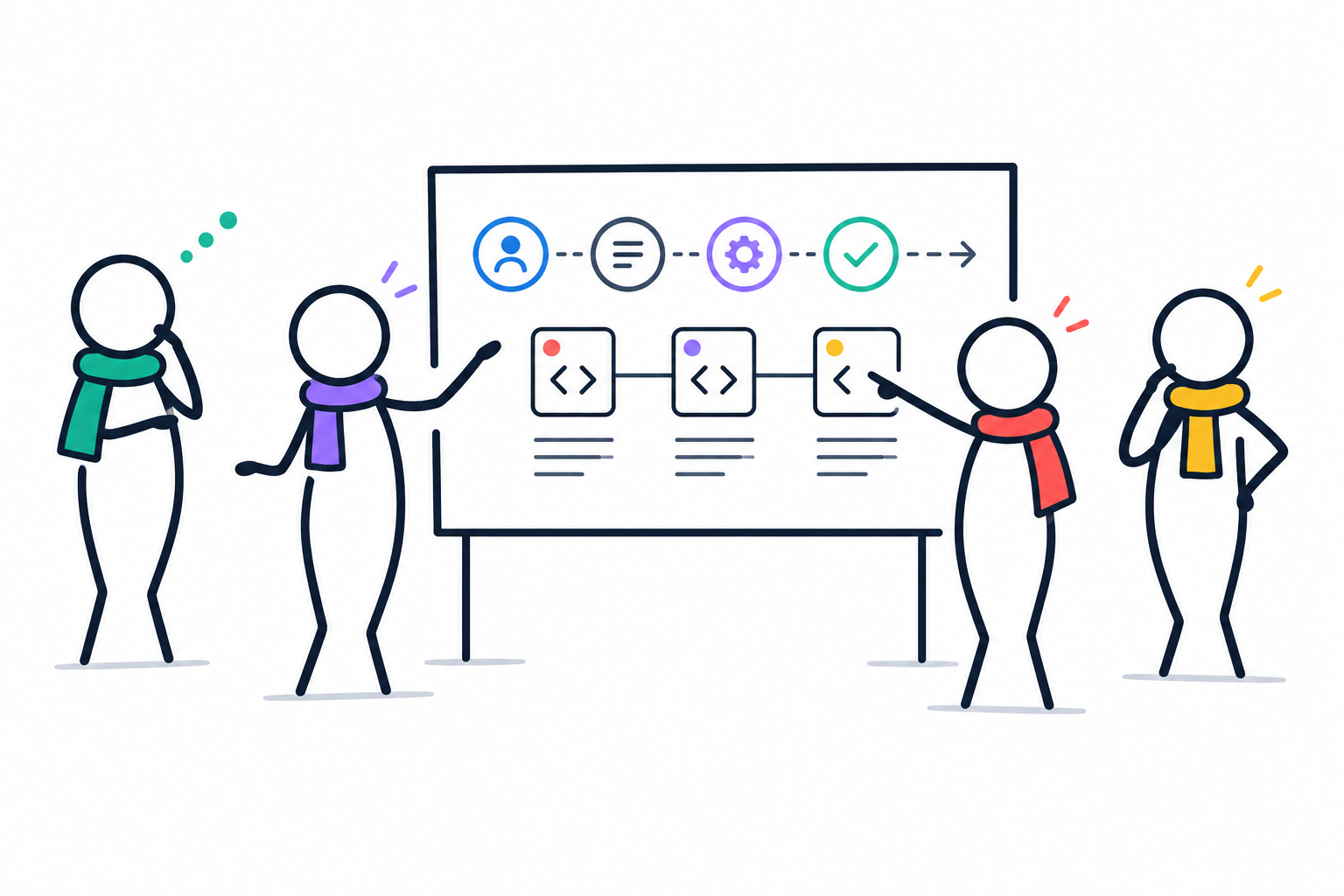
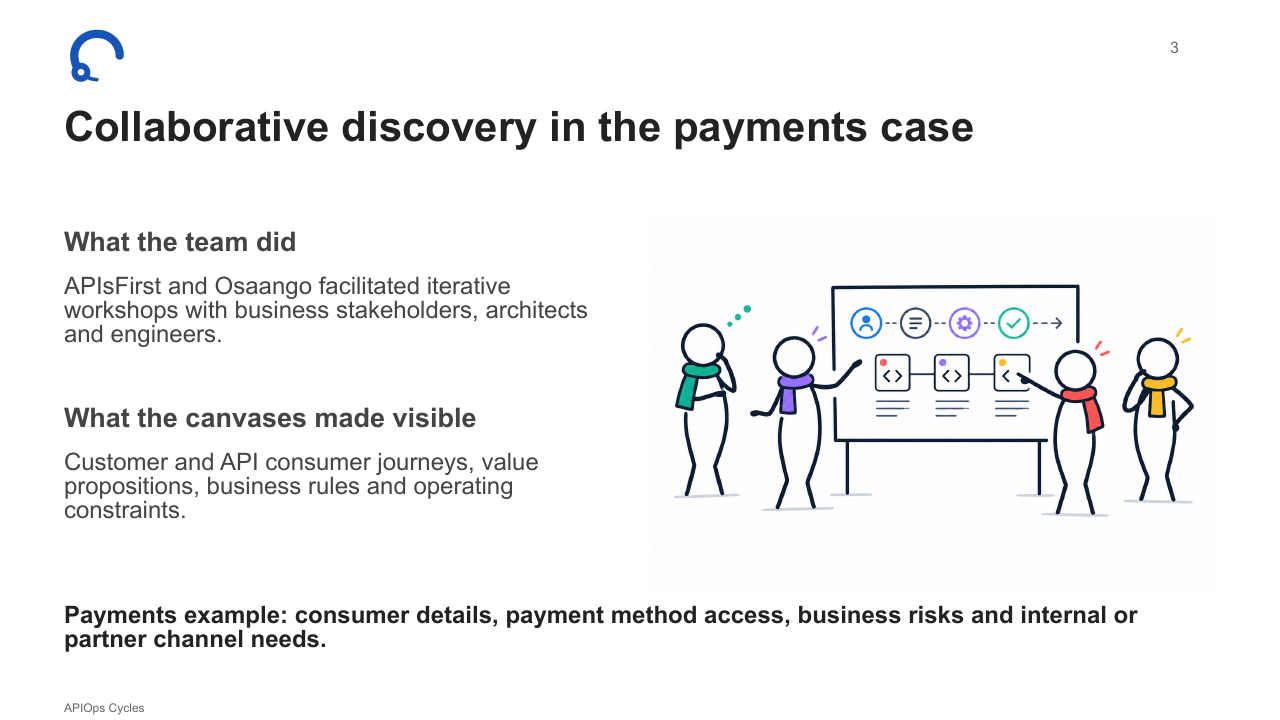
Visual: Generated conceptual APIOps workshop scene, not a photograph or project artefact

Payments example: consumer details, payment method access, business risks and internal or partner channel needs.

Slide 4: Customer Journey Canvas: a supplier payment

Slide 4: Customer Journey Canvas: a supplier payment
Read text version of slide 4

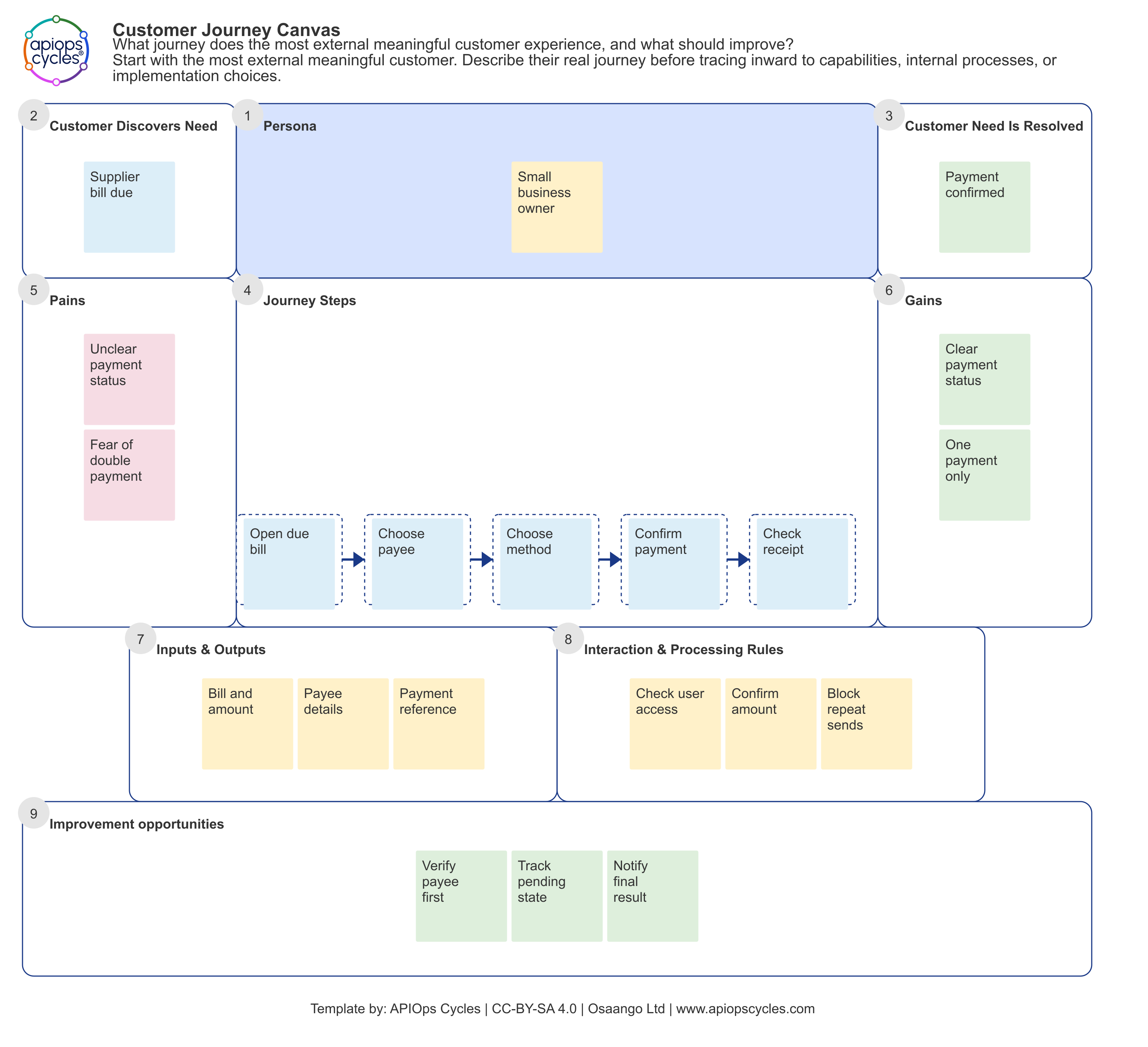
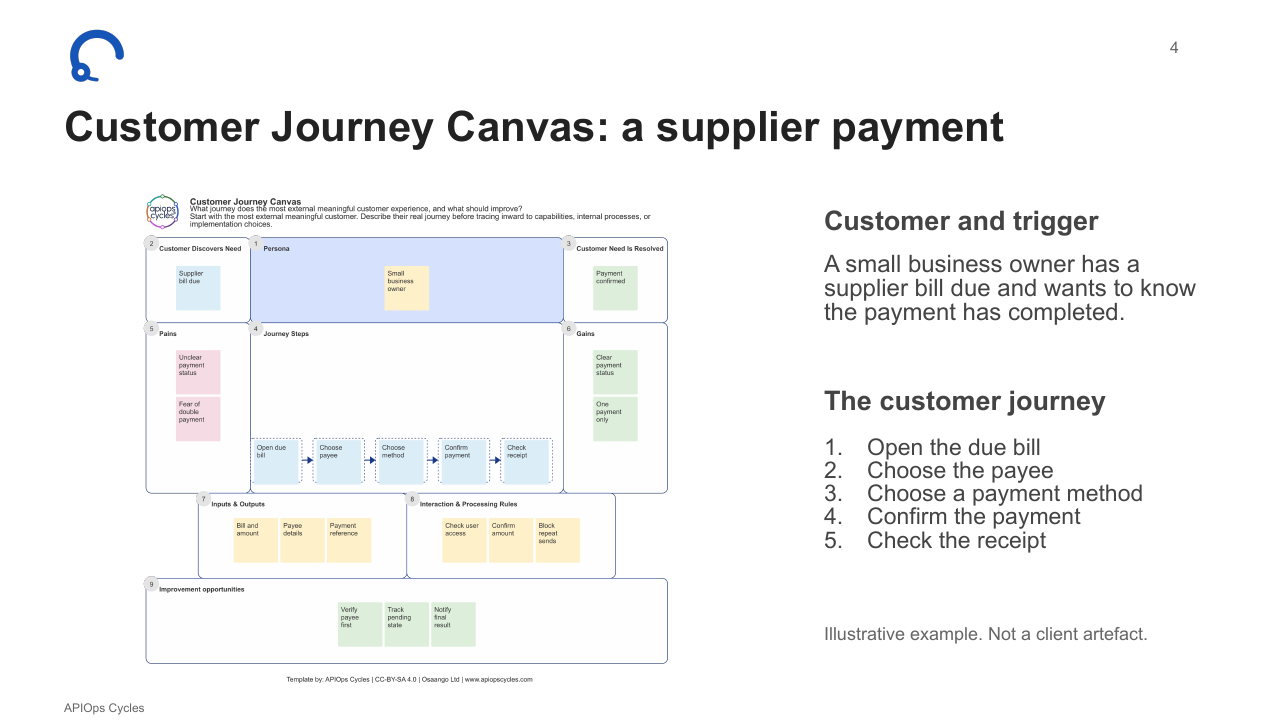
Visual: New illustrative filled Customer Journey Canvas for a small business owner paying a supplier invoice

Customer and trigger

A small business owner has a supplier bill due and wants to know the payment has completed.

The customer journey

  1. Open the due bill
  2. Choose the payee
  3. Choose a payment method
  4. Confirm the payment
  5. Check the receipt

Illustrative example. Not a client artefact.

Slide 5: API Value Proposition Canvas: the same journey

Slide 5: API Value Proposition Canvas: the same journey
Read text version of slide 5

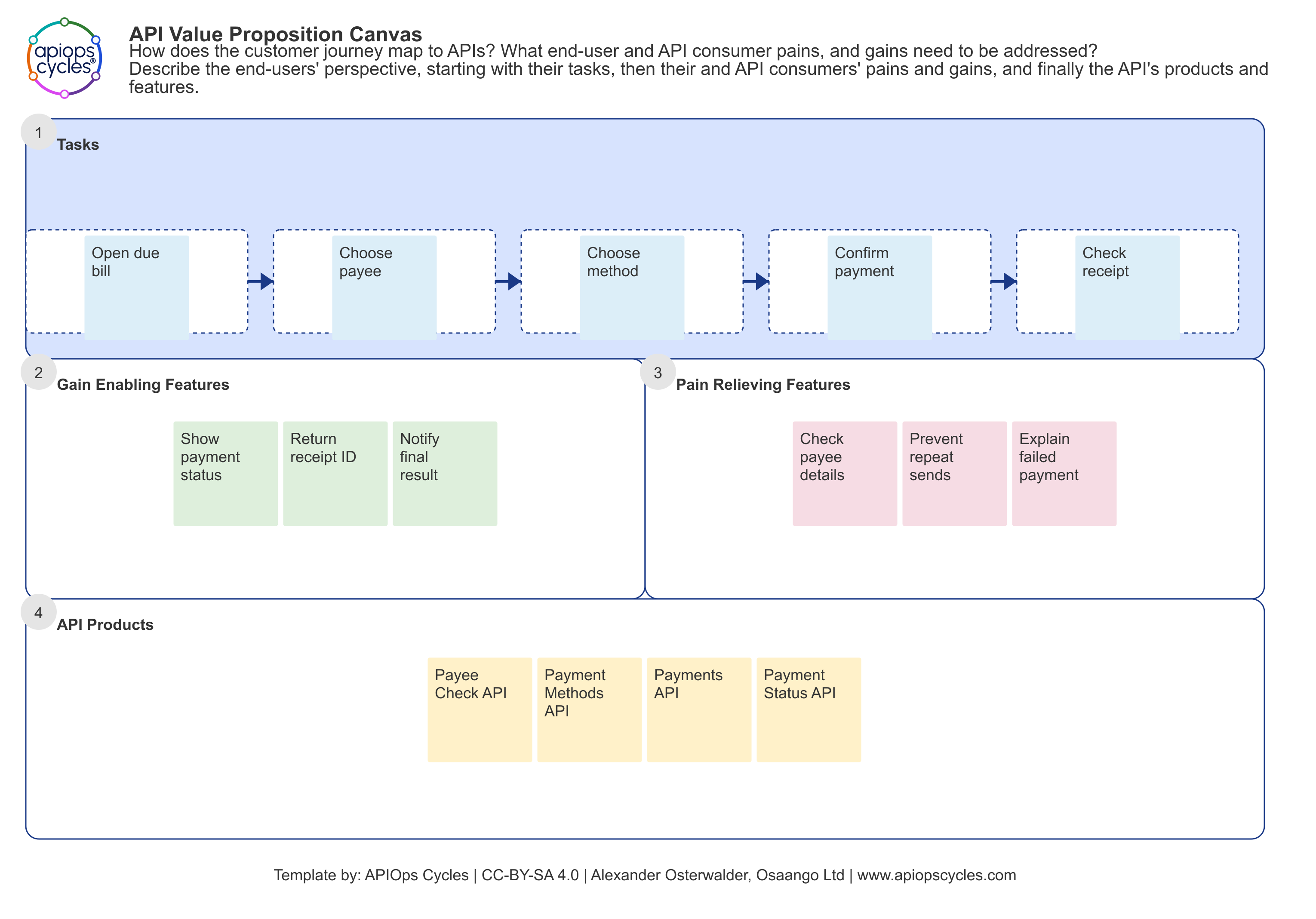
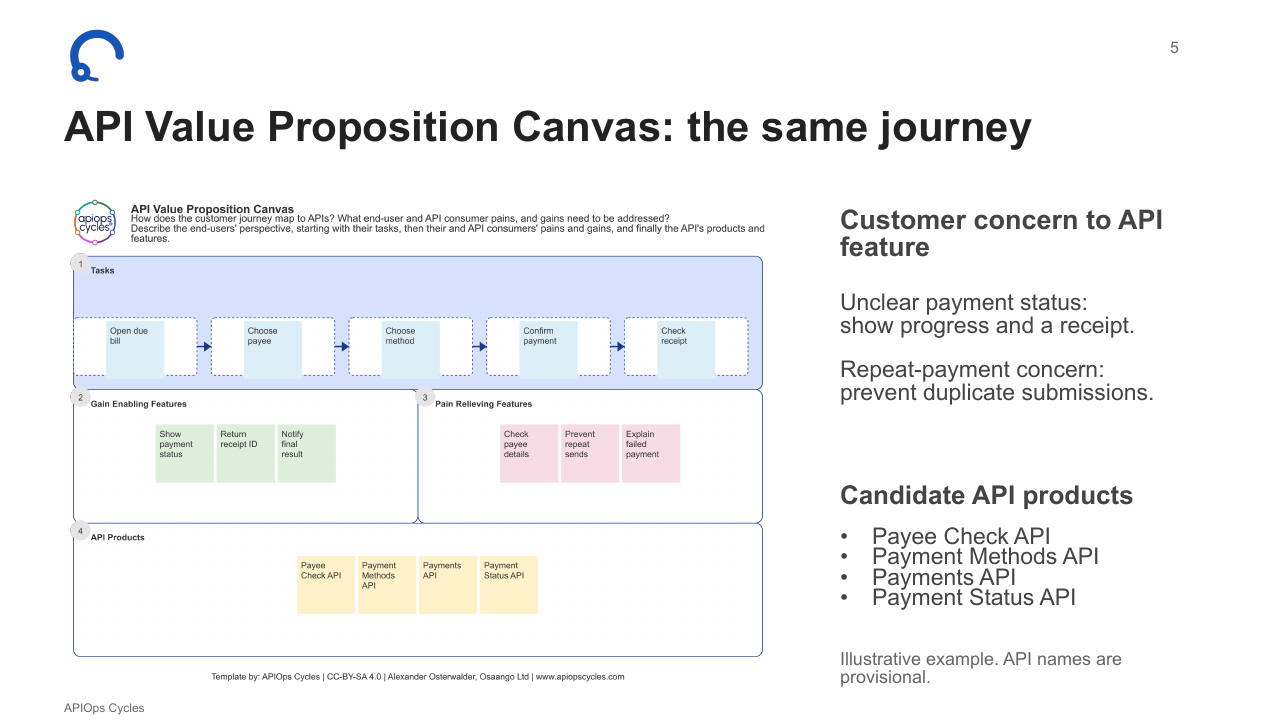
Visual: New illustrative filled API Value Proposition Canvas using the same supplier-payment tasks

Customer concern to API feature

Unclear payment status: show progress and a receipt. Repeat-payment concern: prevent duplicate submissions.

Candidate API products

  • Payee Check API
  • Payment Methods API
  • Payments API
  • Payment Status API

Illustrative example. API names are provisional.

Slide 6: Other canvases supporting API product decisions

Slide 6: Other canvases supporting API product decisions
Read text version of slide 6

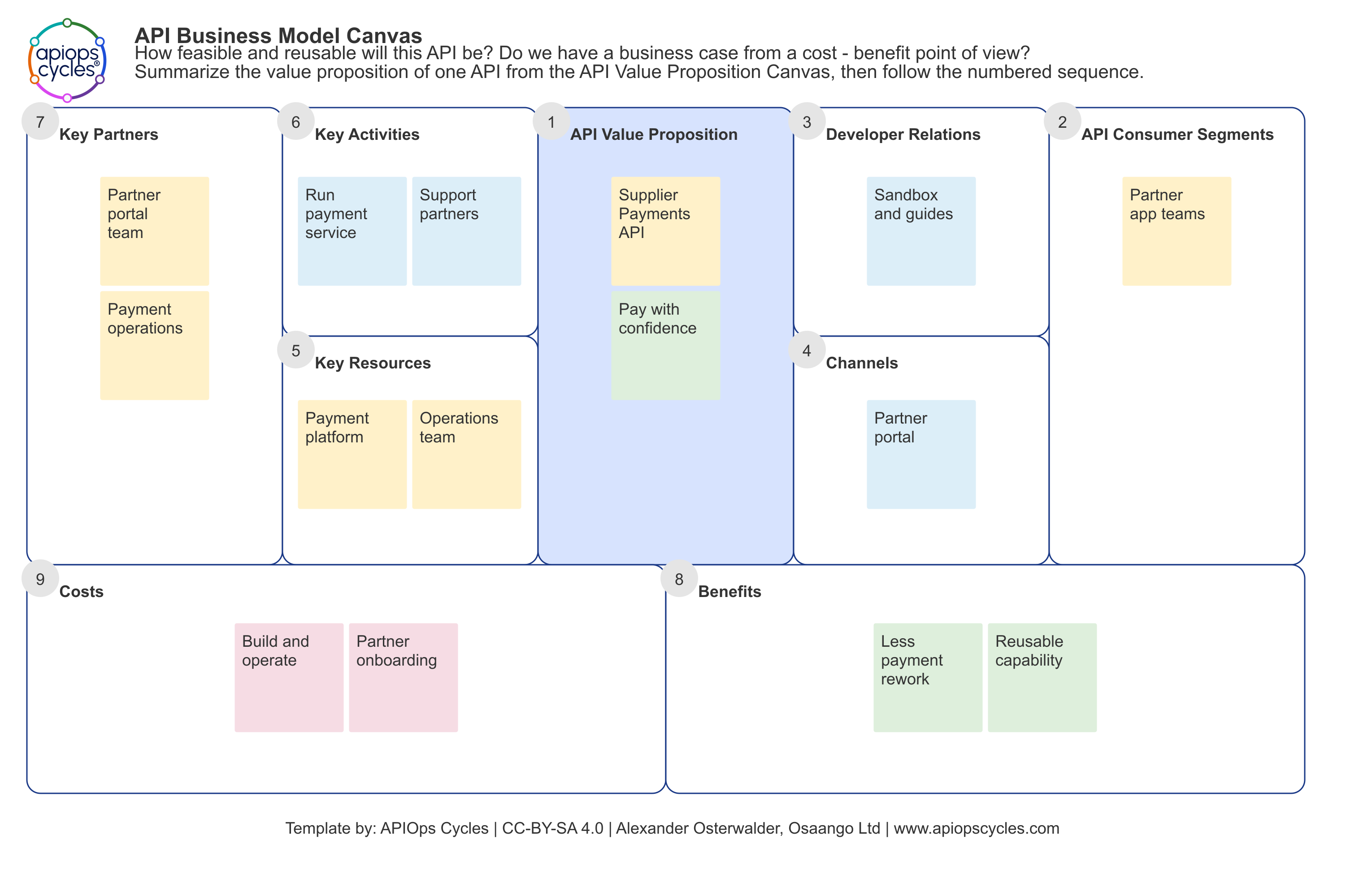
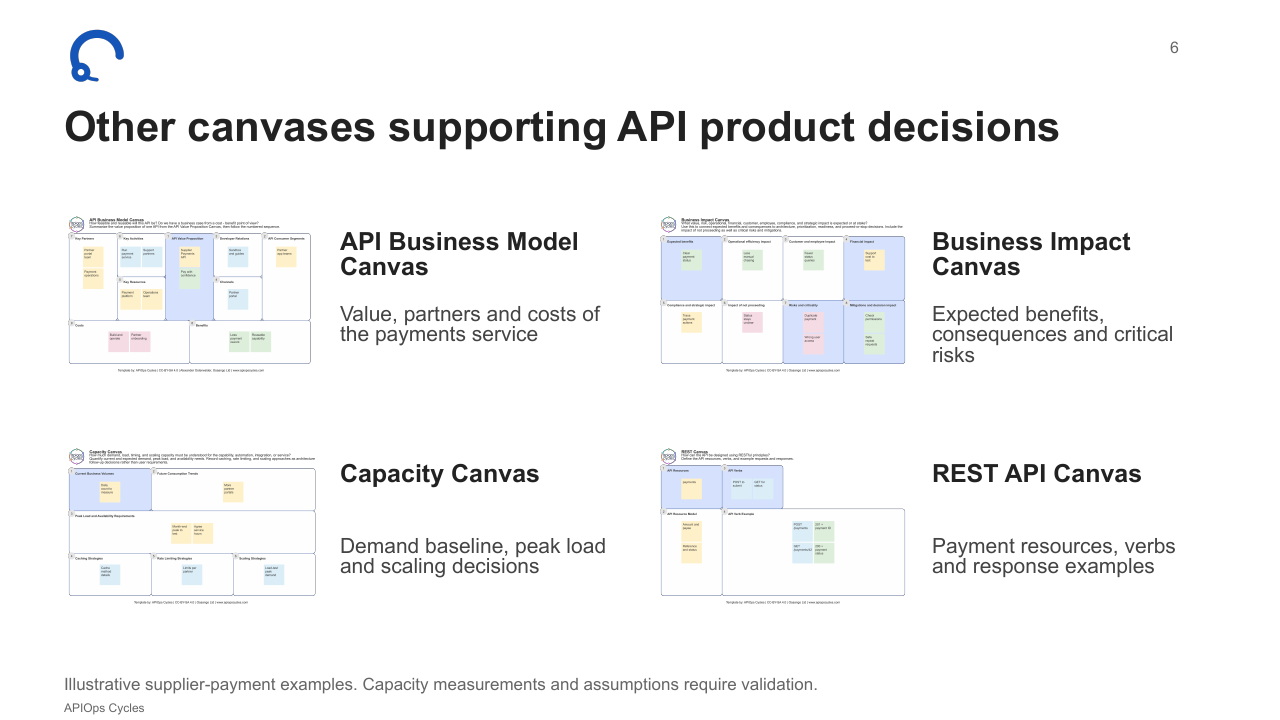
Visual: New illustrative supplier-payment API Business Model Canvas

API Business Model Canvas

Value, partners and costs of the payments service

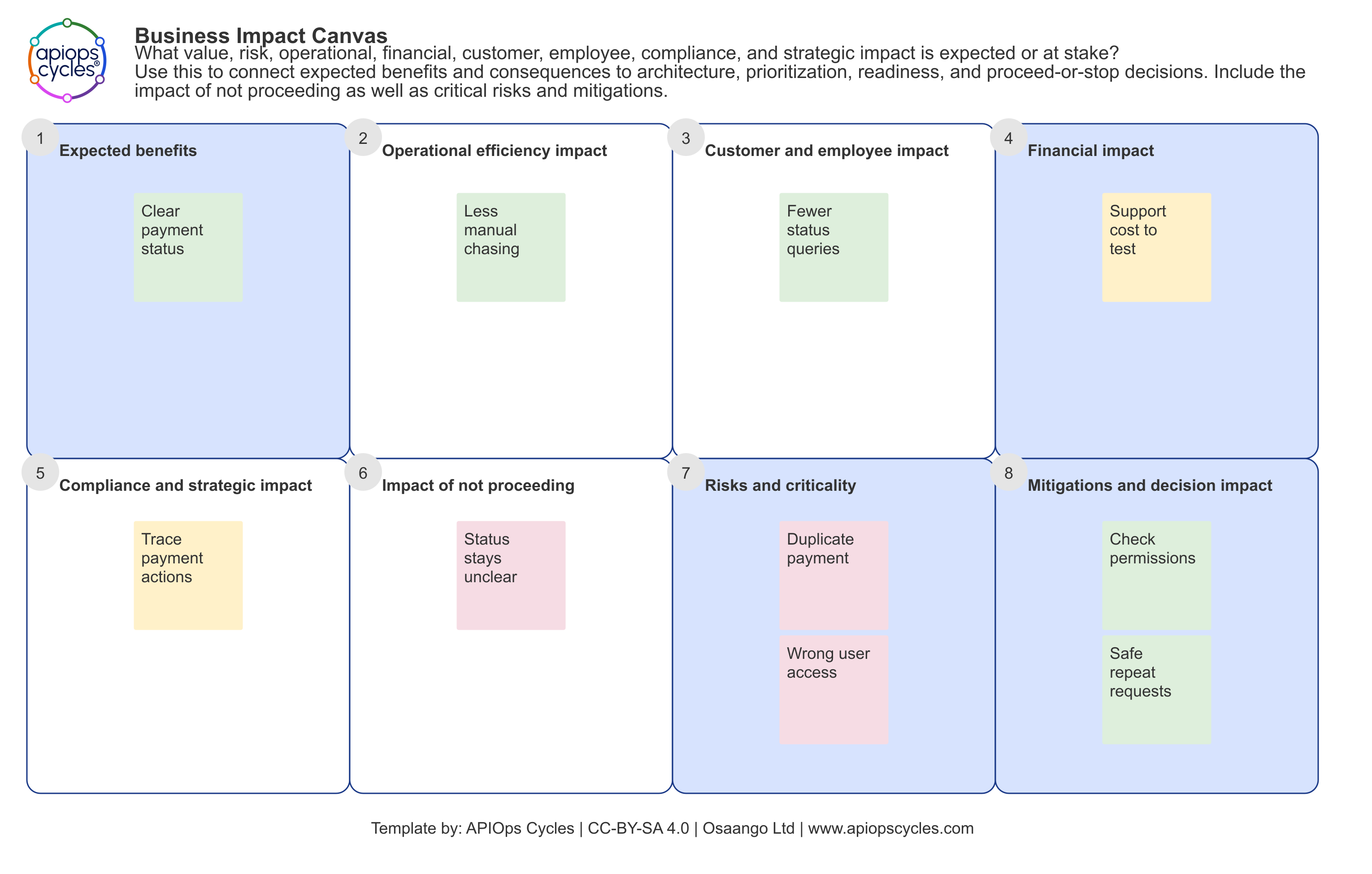
Visual: New illustrative supplier-payment Business Impact Canvas

Business Impact Canvas

Expected benefits, consequences and critical risks

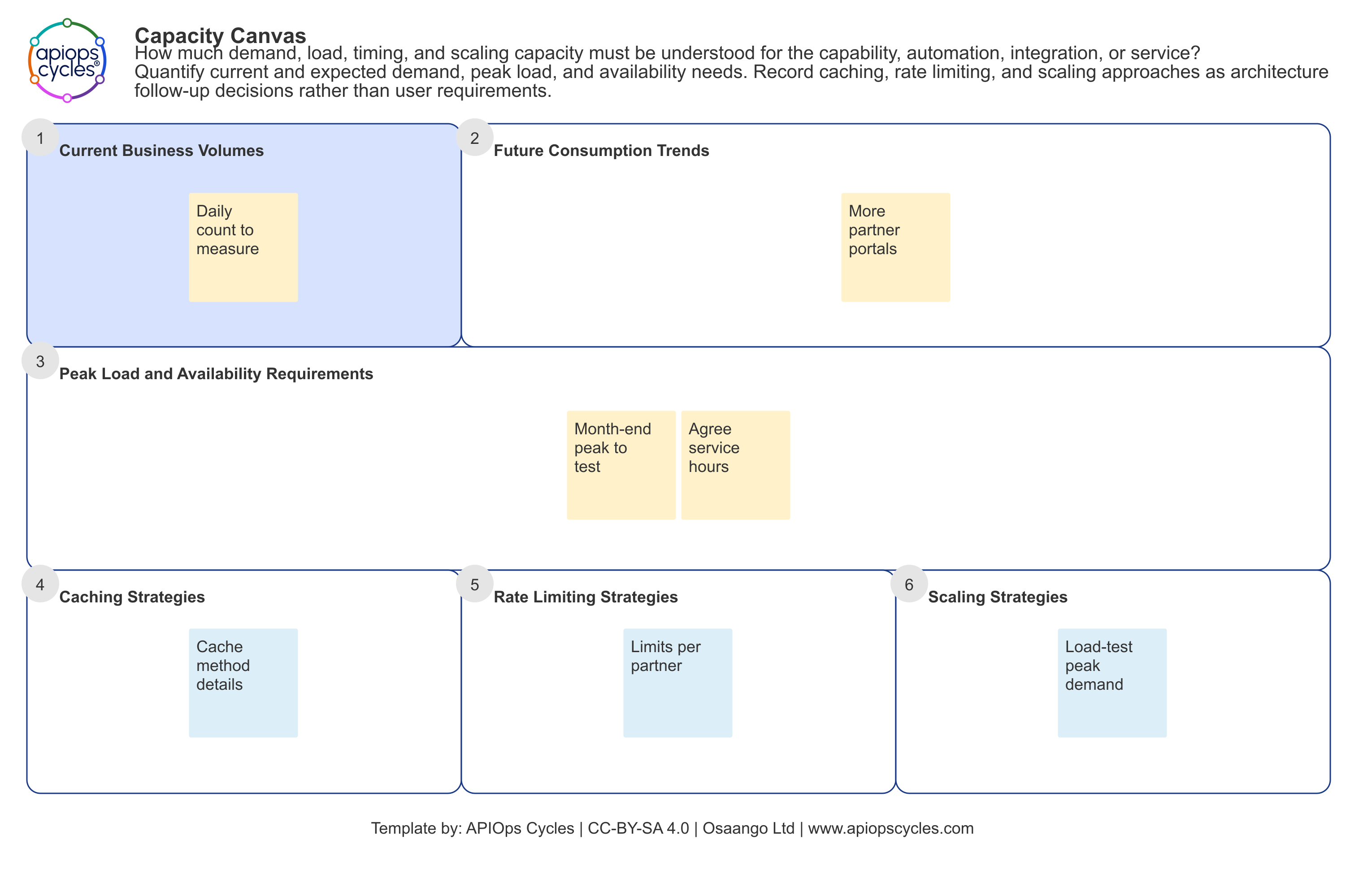
Visual: New illustrative supplier-payment Capacity Canvas

Capacity Canvas

Demand baseline, peak load and scaling decisions

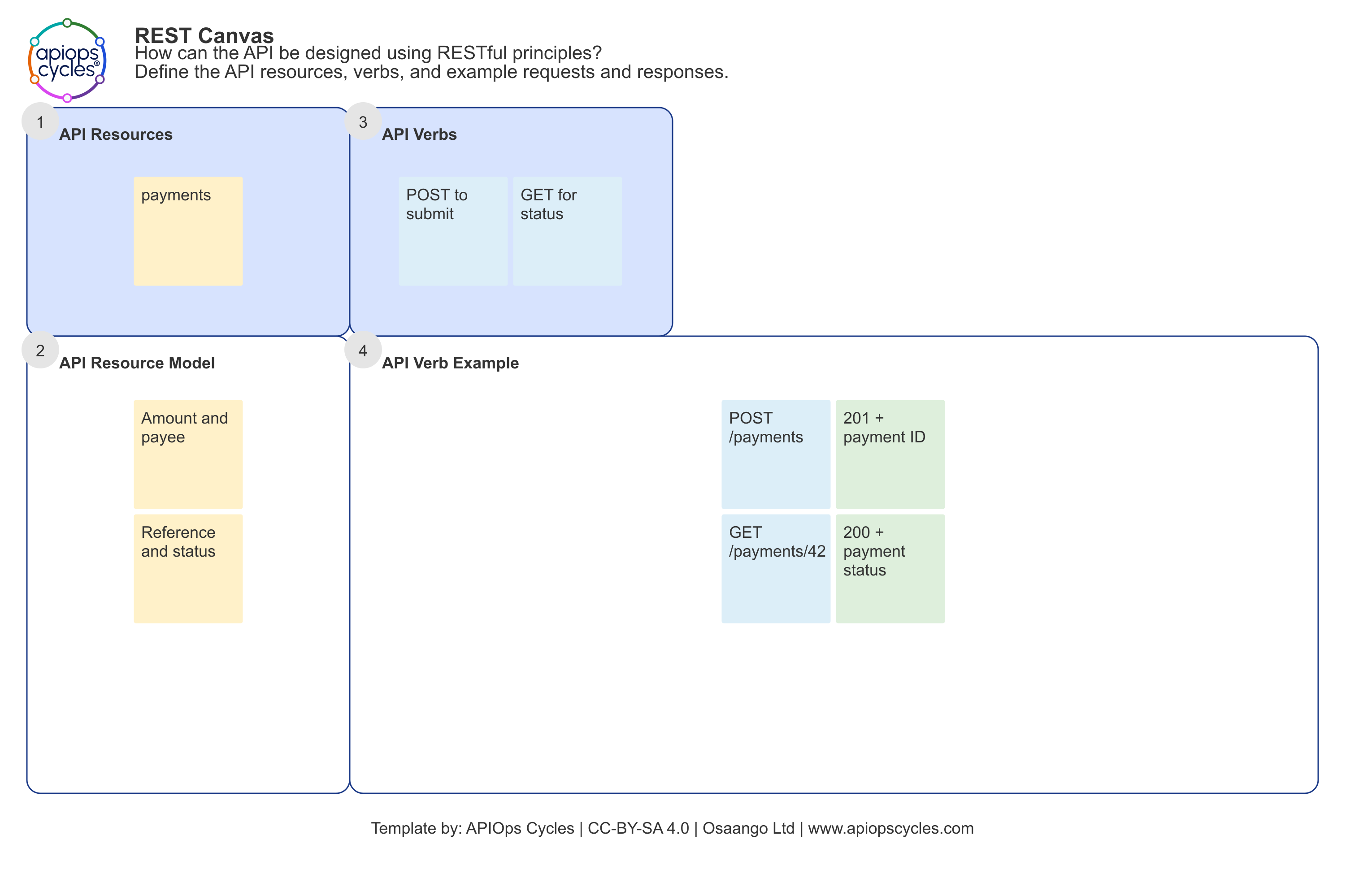
Visual: New illustrative supplier-payment REST API Canvas

REST API Canvas

Payment resources, verbs and response examples

Illustrative supplier-payment examples. Capacity measurements and assumptions require validation.

Slide 7: API Productization Cycle metro map

Slide 7: API Productization Cycle metro map
Read text version of slide 7

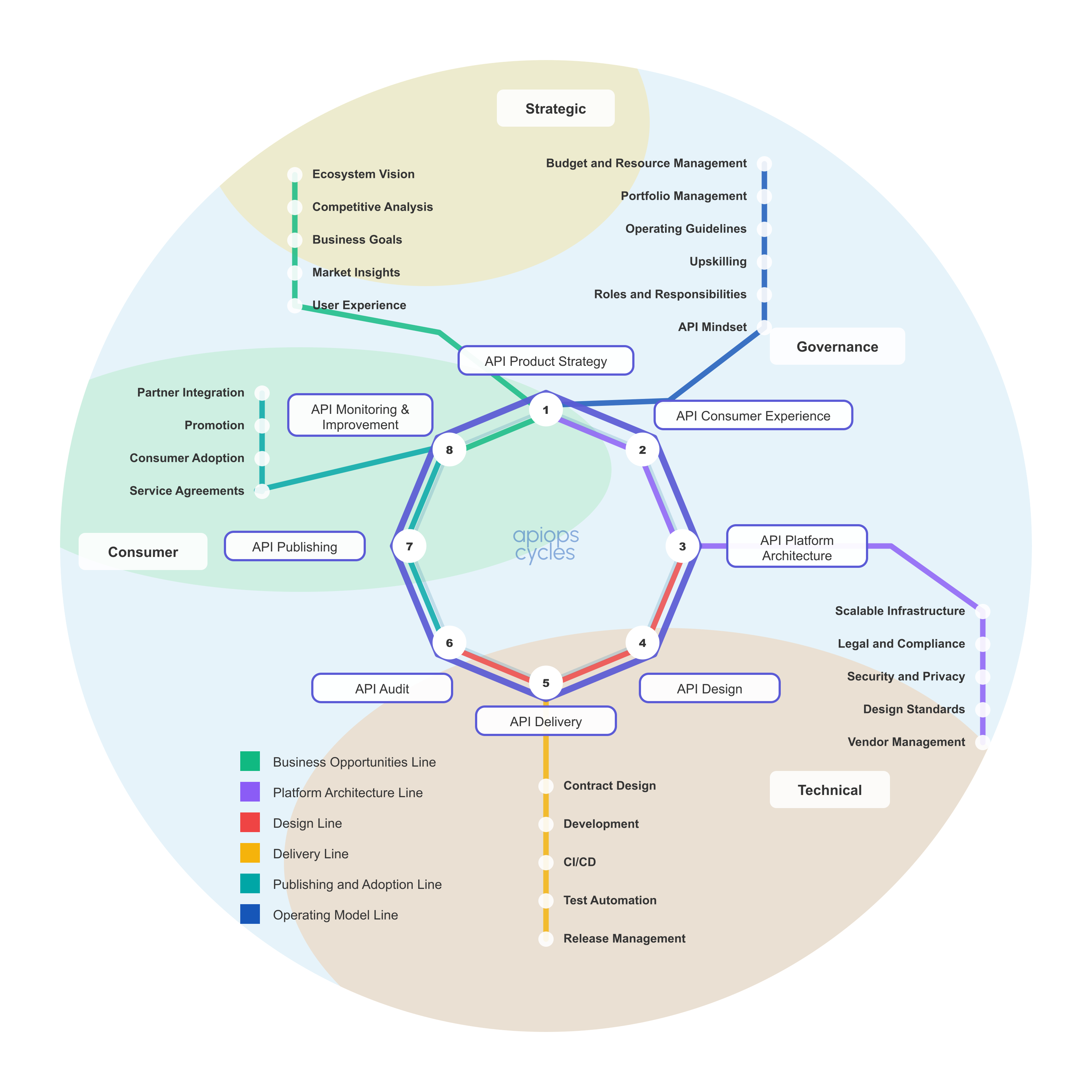
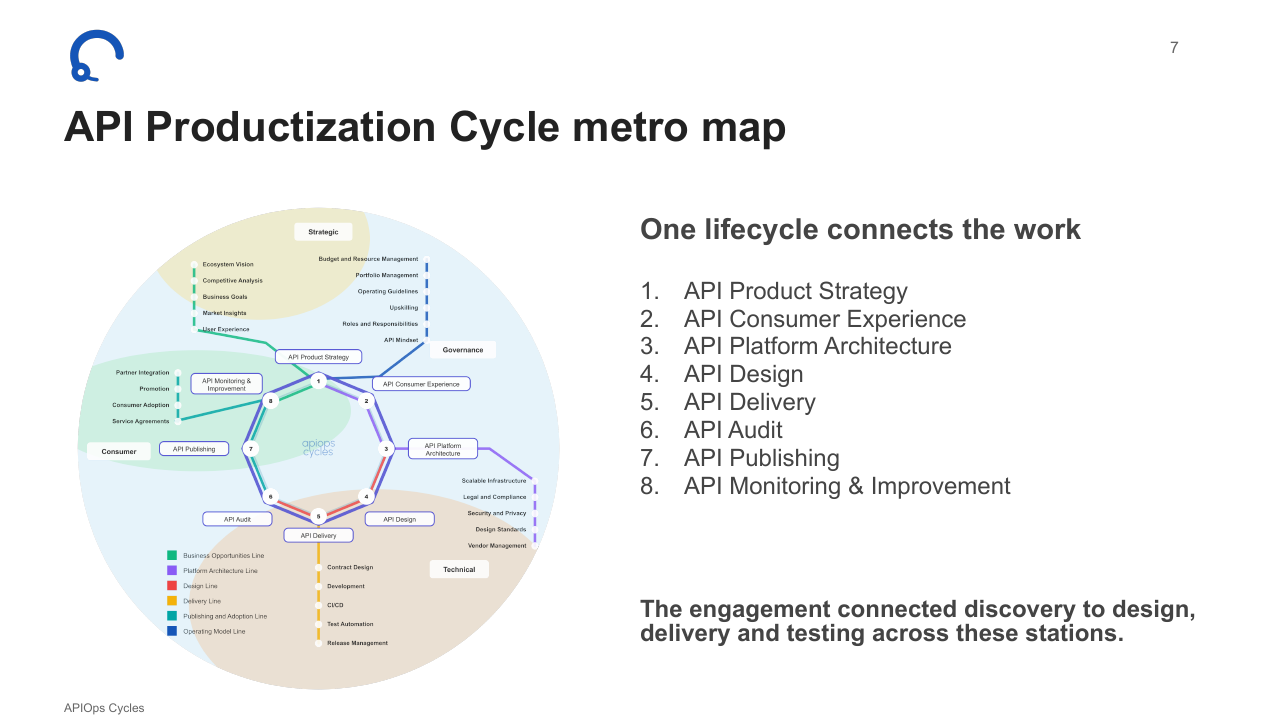
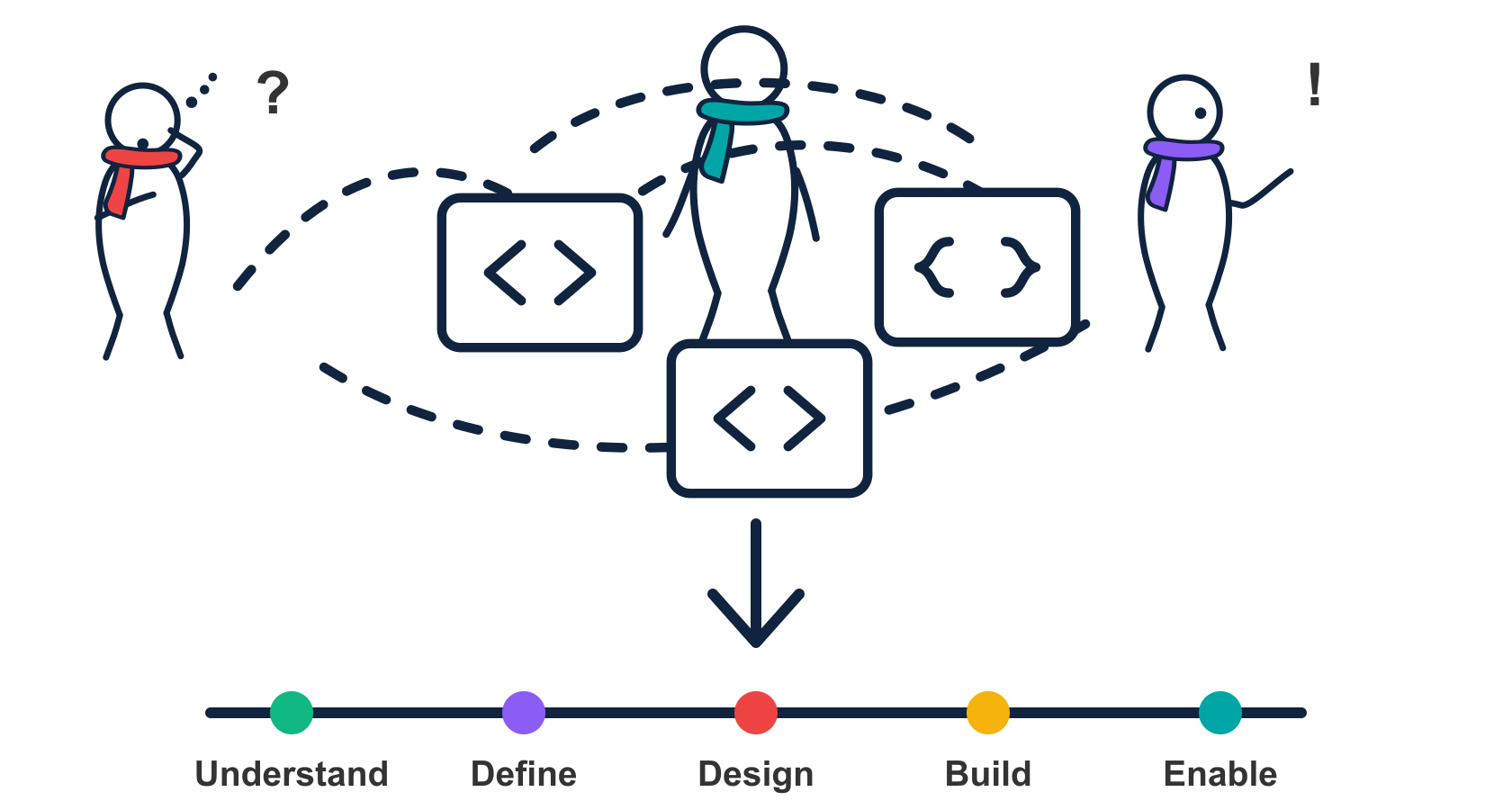
Visual: Official API Productization Cycle metro map exported from the repository application

One lifecycle connects the work

  1. API Product Strategy
  2. API Consumer Experience
  3. API Platform Architecture
  4. API Design
  5. API Delivery
  6. API Audit
  7. API Publishing
  8. API Monitoring & Improvement

The engagement connected discovery to design, delivery and testing across these stations.

Slide 8: Discovery informed decisions across the lifecycle

Slide 8: Discovery informed decisions across the lifecycle
Read text version of slide 8

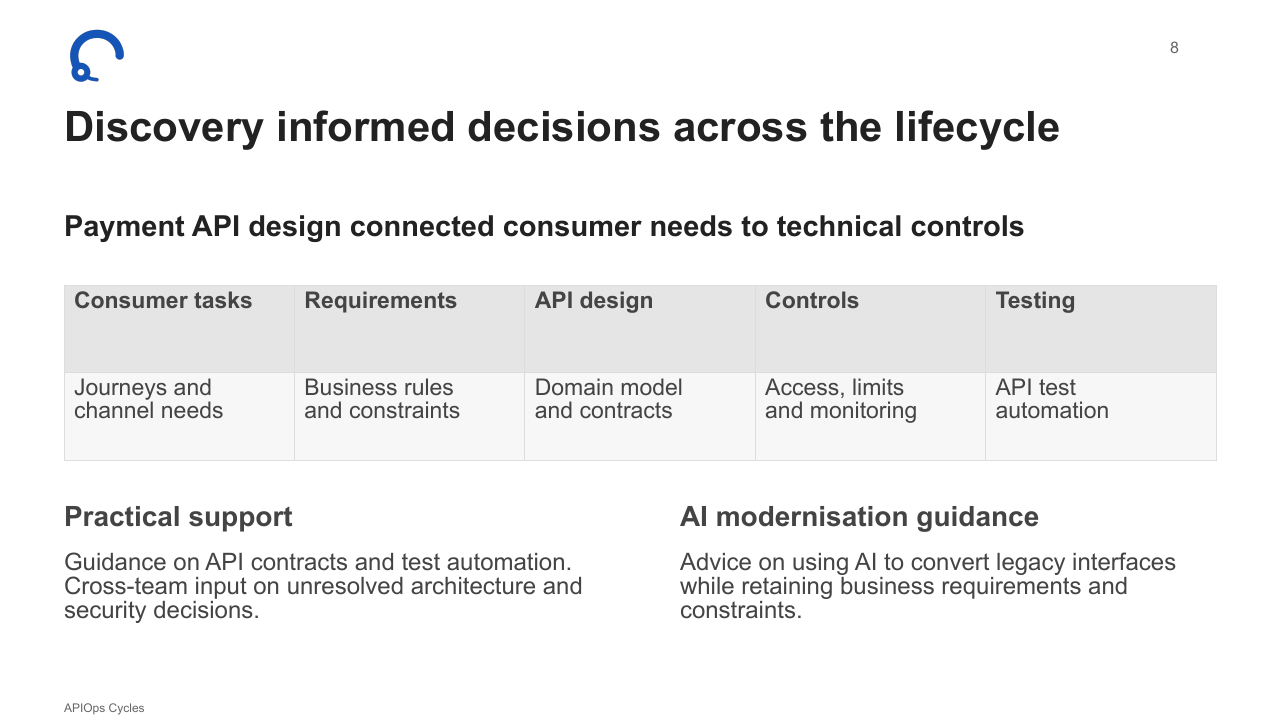
Payment API design connected consumer needs to technical controls

Consumer tasksRequirementsAPI designControlsTesting
Journeys and channel needsBusiness rules and constraintsDomain model and contractsAccess, limits and monitoringAPI test automation

Practical support

Guidance on API contracts and test automation. Cross-team input on unresolved architecture and security decisions.

AI modernisation guidance

Advice on using AI to convert legacy interfaces while retaining business requirements and constraints.

Slide 9: API product management in everyday work

Slide 9: API product management in everyday work
Read text version of slide 9
  • Consumers and value: Who uses the API, and what does it help them do?
  • Ownership: Who is responsible for the product over its lifecycle?
  • Reuse and adoption: How can other teams discover and use the capability?
  • Lifecycle decisions: How should the product evolve as needs change?
  • Governance and developer experience: How do practices support product outcomes?

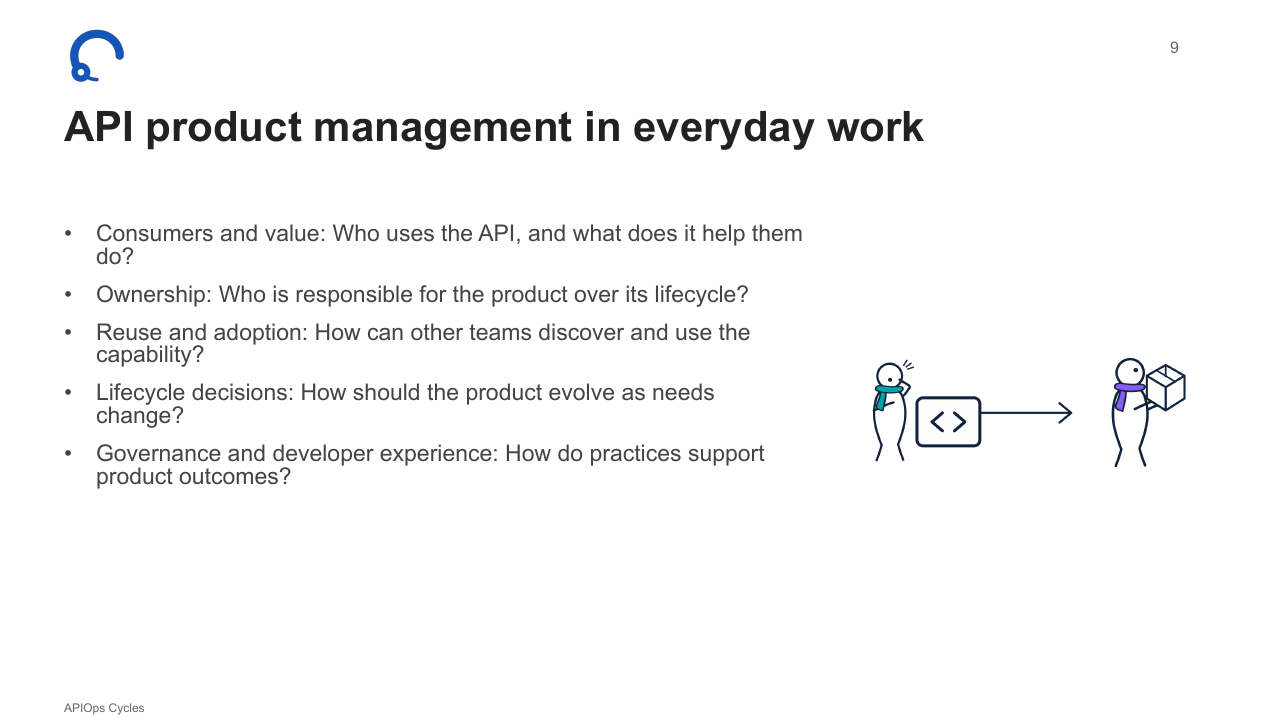
Visual: APIOps human scene connecting an API interface to a reusable product capability

Slide 10: Portfolio planning coordinated API releases

Slide 10: Portfolio planning coordinated API releases
Read text version of slide 10

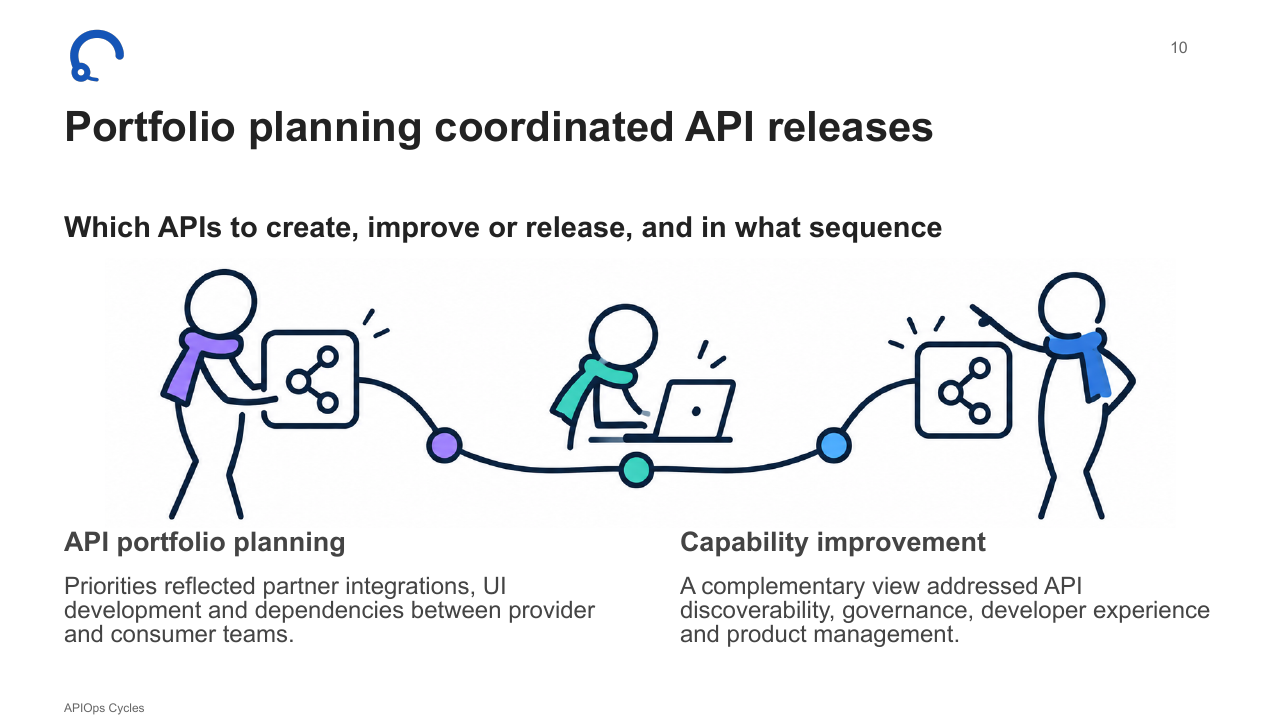
Which APIs to create, improve or release, and in what sequence

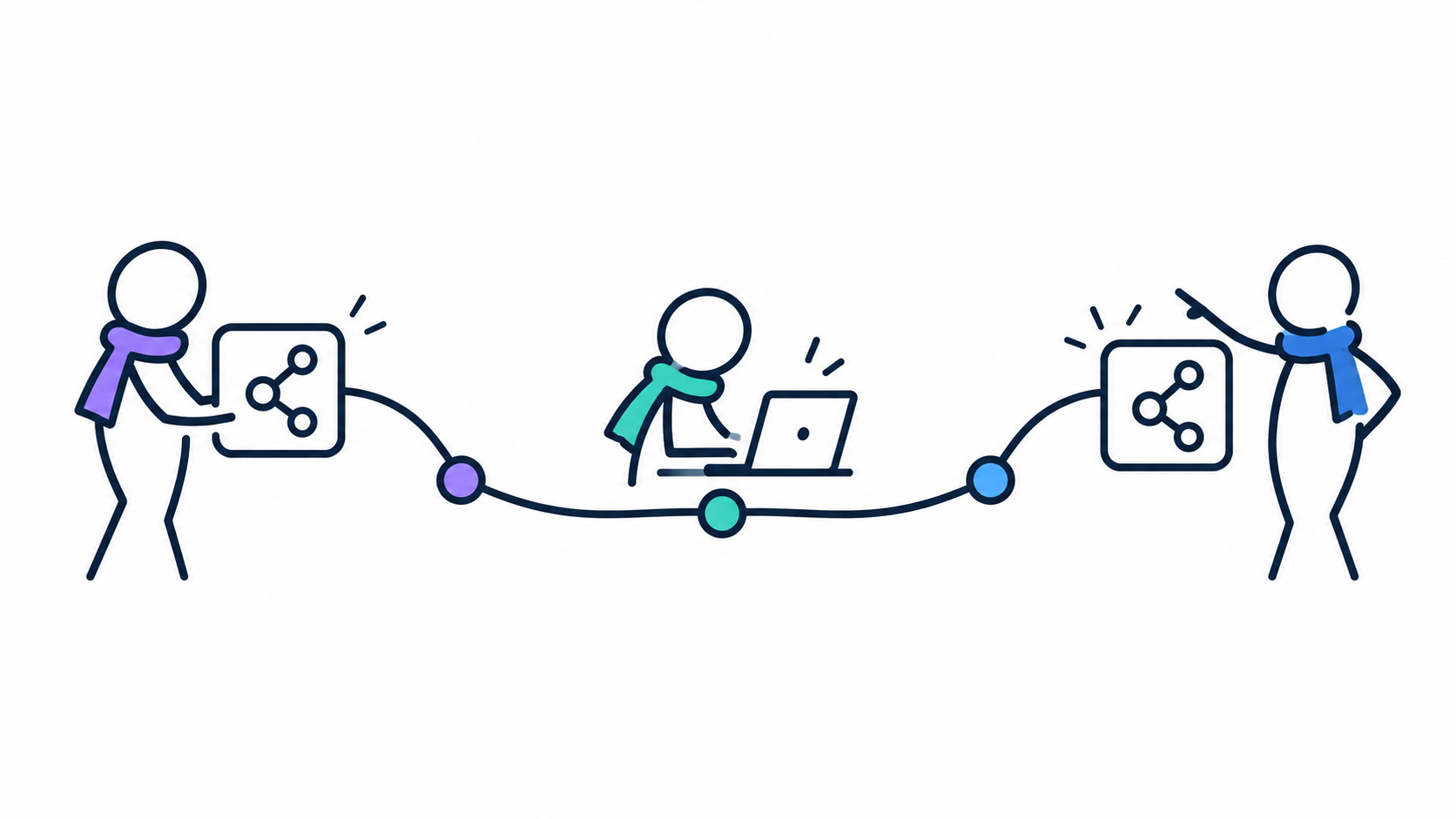
Visual: Generated conceptual API dependency and release-coordination scene

API portfolio planning

Priorities reflected partner integrations, UI development and dependencies between provider and consumer teams.

Capability improvement

A complementary view addressed API discoverability, governance, developer experience and product management.

Slide 11: The value across products, portfolio and ways of working

Slide 11: The value across products, portfolio and ways of working
Read text version of slide 11

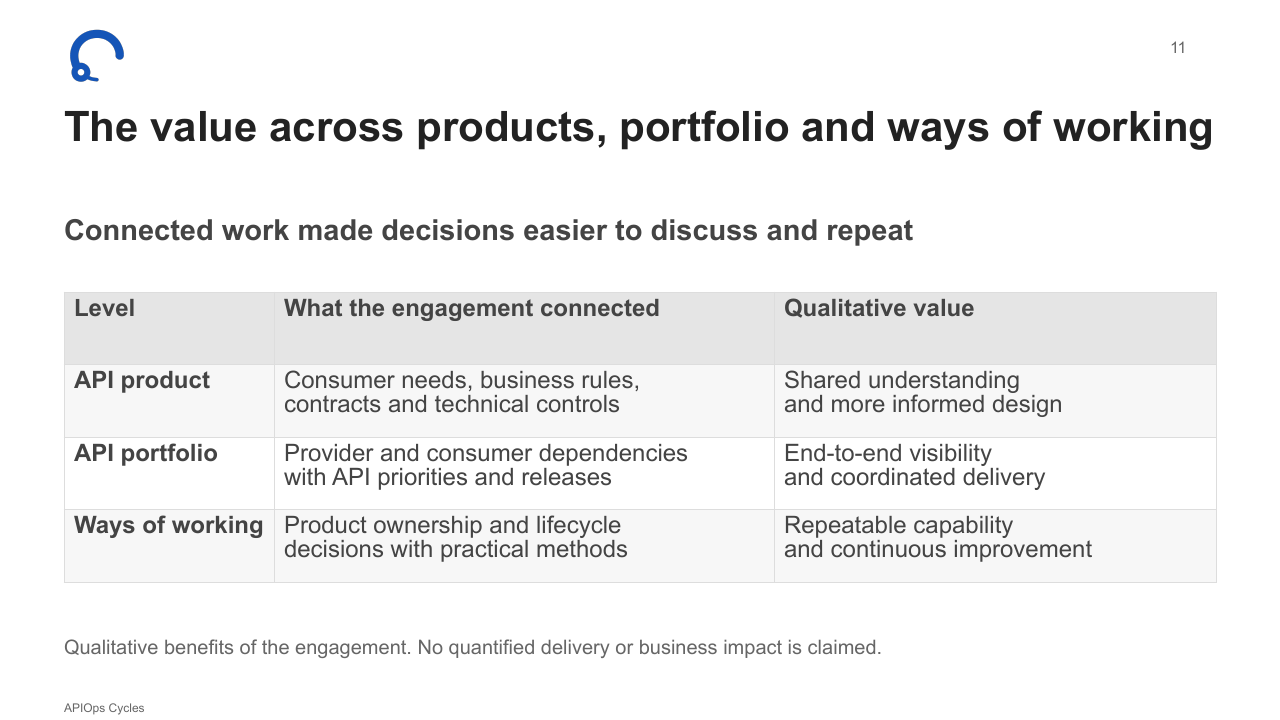
Connected work made decisions easier to discuss and repeat

LevelWhat the engagement connectedQualitative value
API productConsumer needs, business rules, contracts and technical controlsShared understanding and more informed design
API portfolioProvider and consumer dependencies with API priorities and releasesEnd-to-end visibility and coordinated delivery
Ways of workingProduct ownership and lifecycle decisions with practical methodsRepeatable capability and continuous improvement

Qualitative benefits of the engagement. No quantified delivery or business impact is claimed.

Use arrow keys or swipe to navigate, Esc for slide overview and S for speaker view. Back to presentation details and source.